Mother Gerrelain hasn't been allowed to take care of her children herself for 13 years! No one tells allowance mom why not.

https://www.trouw.nl/cs-bf33e00c
“It's fighting against a power bloc”.
Gerrelain's children, victims of the benefits affair, were evicted from home almost 13 years ago. The reasons for this have always remained unclear to her. According to her, good research was never done later whether she could still raise her children herself. “It's fighting against a power bloc”.
https://www.trouw.nl/cs-bf33e00c
Read this article! It provides a very good picture of the consequences of the surcharges. Gerrelain has been under the government's stranglehold for 13 years. Youth services, the tax authorities, lack of money. The system of continuously imposing high fines is also clearly visible. How illogical it is, if you supposedly can't pay, you have to pay even more as a punishment. From what? This is a freakishly poignant article that Pieter Omtzigt rightly tweeted about on January 5, 2022.
Interview from Home Placements
For 13 years, no one has been able to tell allowance parent Gerrelain (36) why she is not allowed to take care of her children herself
Gerrelain's children, victims of the benefits affair, were evicted from home almost 13 years ago. The reasons for this have always remained unclear to her. According to her, good research was never done later whether she could still raise her children herself. “It's fighting against a power bloc”.

This article was written byKristel van Teeffelen and Laura van BaarsPublished on January 5, 2022, 7:00am
Save
Share
In Gerrelain's large Surinamese family (36), such a thing was impossible: having your own children taken away from you. She was therefore afraid to tell them when, in February 2009, after being held at the police station for six hours, she was kicked back out alone and without a coat.
NEW
Join Trouw and get online access to the 11 best newspapers
From regional to world news, from sports to culture
From
2.25 per week

Inside the office, or perhaps already at a crisis shelter, were her three children aged 3 months, 2 and 5 years. Earlier that day, the police raided the house in Bijlmer in Amsterdam, where she was still staying in connection with the early birth of her son. She says she was handcuffed and blindfolded. Her kids were taken away in no time.
For the past thirteen years, Gerrelain, the victim of the benefits affair, spoke to almost no one about how she lost her children. For the first time, she is now telling her own story. Together with her eldest son Jevainel (16) and Greetje Verheul, now retired but involved with the family at the time as Local Care Network coordinator of the GGD in Rotterdam. A second counselor also joined the conversation. She does not want her name in the newspaper so as not to complicate further help to Gerrelain. However, she confirms her story.
Children removed without any personal examination beforehand
What preceded the relocation? Gerrelain never received the child welfare file on the basis of which her children were removed despite repeated questions. Attempts by the Municipality of Rotterdam's Allowance Team, which assists victims of the benefits affair, and the children's ombudsman in the Maasstad to uncover the file with Youth Protection Rotterdam Rijnmond (JBRR) also failed. When asked, JBRR does not want to elaborate on Gerrelain's case. The general policy is that parents of children under 12, who still have parental authority, can view the files if this is not harmful to the child, says a spokesperson.
Greetje Verheul is disappointed with JBRR's' meaningless' response. Gerrelain's children were very young when she still had parental authority and she should have been able to view the files. However, that hasn't happened since 2009. “Gerrelain's children were 3 months, 2 years and 5 years old when they were removed from her without any personal examination beforehand. She only lost parental authority three years later. JBRR does not comment on this situation; there is also no sign of sympathy. That is, to say the least, amazing for a professional organization that cares about the well-being of children.”
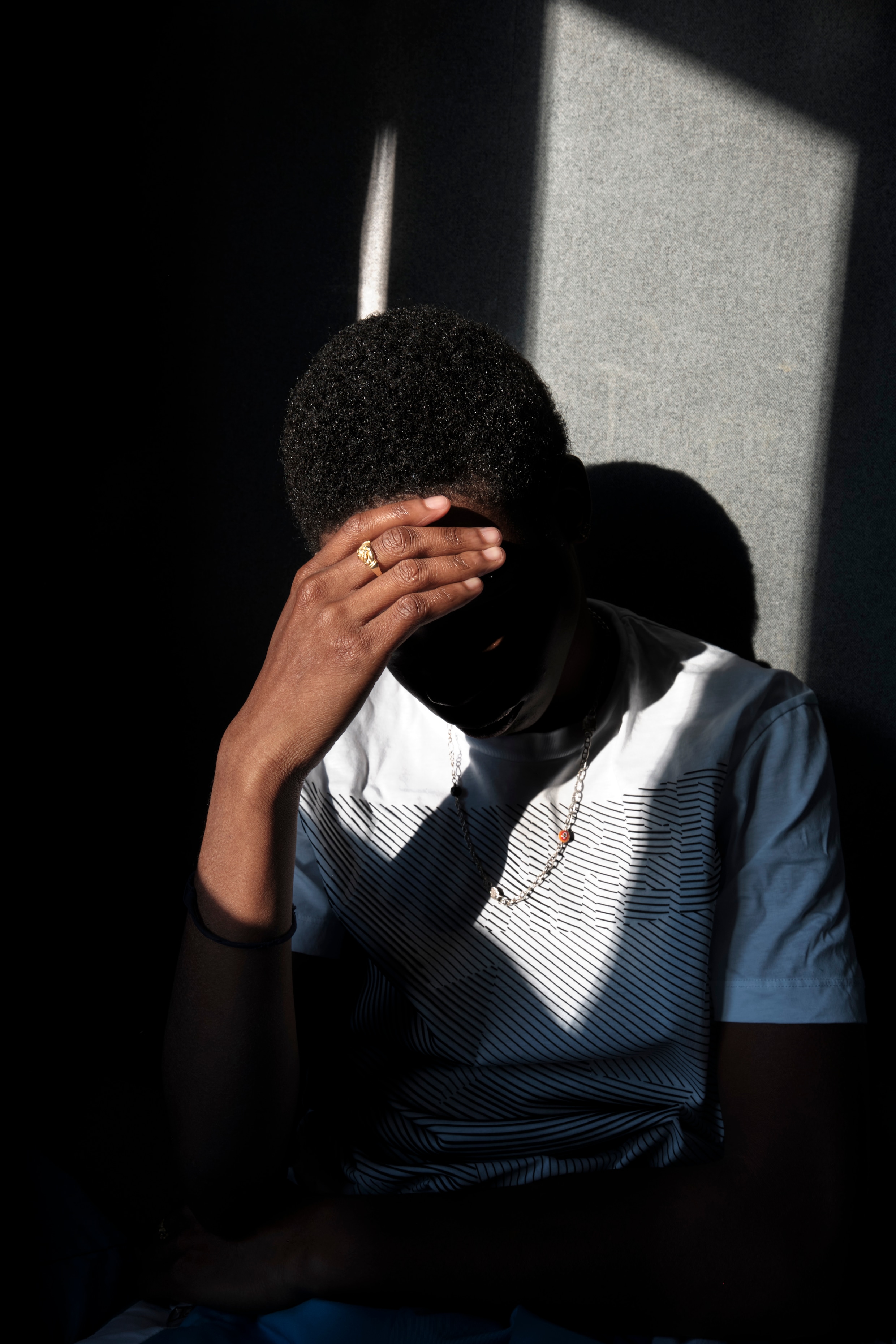
She was wrongly accused of child care allowance fraud.
What Gerrelain found out is that her social worker reported her to youth services in mid-2008. Verheul had forwarded Gerrelain to social work for debt counseling. Gerrelain, then a 22-year-old student and pregnant with her third child, owed 27,000 euros to the tax authorities. As it turned out, she was wrongly accused of fraud and had to pay back her childcare allowance. “The documents I used to prove that I had not committed fraud were constantly lost at the tax office,” says Gerrelain. “I always went to the office in Rotterdam and each time I was fined on top of it.” Her debt rose to 47,000 euros.
Gerrelain was under a lot of stress due to the financial problems. Her social worker was hard of hearing, which caused communication problems. She did not feel well helped. Instead of going to social work appointments, Gerrelain went to Verheul when she needed help.
Accountability
For this story, Trouw spoke to Gerrelain, her son Jevainel, retired counselor Greetje Verheul, another involved counselor and an employee of the 2010 Allowance Team, who is familiar with Gerrelain's case. The full names of all these people are known to the chief editors. Rotterdam Rijnmond Youth Protection (JBRR) has also been asked for a response. The organization, which was responsible for relocating the children at the time, says it cannot respond to individual cases because of the protection of the privacy of children and their parents. Since 2012, Gerrelain's family has been under the responsibility of the Salvation Army, Youth Protection & Probation.
On the day of her son's birth, her children were supervised
Then, in January 2009, she found a letter from youth services on the bus from her home in Rotterdam. At that time, she had been in Amsterdam for a few months, after her membranes were broken too early and she ended up in hospital and went to appointments with the clinic after her delivery.
“On November 28, my son was born. On exactly that day, a judge decided that my children were placed under the supervision of youth services. I knew nothing about it. I had not received a single message about a hearing or anything.” The letter she found in January was the first letter from youth services she received, says Gerrelain. “I regularly picked up my mail in Rotterdam.” Verheul also knew nothing about it.
Gerrelain was appointed a temporary family guardian. On February 20, 2009, she thought she was having an introductory meeting with him. Instead, according to her, about fifteen officers appeared and surrounded the house. She was immediately blindfolded and handcuffed. She heard her children crying. Removals are more often carried out this way, confirms Gerrelain's counselor. “Agents and youth services do not know in advance how much resistance they will encounter.”
Jevainel was afraid in the foster home where he was placed
What Jevainel experienced next, at the age of 5, he put on paper. He had a difficult start in life because he was born at 26 weeks. According to his mother, the worries and many hospital visits in his youngest childhood also explain their strong bond. “I was always with her in the early years,” says Jevainel. He thinks that's why the relocation was so difficult.
“I don't remember the first foster family very well. After some time, I was temporarily transferred to the foster family where my brother was already staying. But things didn't go well in that family at all. The wife was always negative about my mother and said I would never go home. She didn't like my mom. The husband beat his wife. Then I crawled behind the couch with my brother. I would always poop in my pants because of fear.”
According to Jevainel, things also did not go well in the third foster family where he ended up. “There was a lot of drinking. That's why I now have trouble seeing alcohol. I think it's really dirty and stinky.”

Jevainel ran away from the youth institution
Eventually, Jevainel ended up at a youth institution in Oostvoorne. He didn't feel at home there, he says. “Every time my mother left after a visit, I cried. I wanted to go with her, but then I was dealt with harshly. I also ran away once and then I had to sit in my room for a long time as punishment. When I got off, the alarm at the door went off. I often sat there for a long time. They also said that if I kept pooping in my pants, I could never go home.”
After a year, a family counselor in Oostvoorne finally made sure that Jevainel could return to his mother. Also because they found him difficult, Gerrelain thinks.
The moment Jevainel returned home, parental authority for her other two children was just terminated by the judge at the request of youth services. They were 3 and 5 years old at the time. A committed employee of the Municipality of Rotterdam's Allowance Team says it is incomprehensible that more effort does not seem to have been made to get the other children back to their mother as well.
Once, youth care came to visit
According to Gerrelain, there was never a proper investigation into whether she was able to raise her children herself. Once, five months after the removal from home, child care came to visit her. “They had nothing negative to say. They thought my home was well furnished.”
She also had to show once that she could take good care of her baby. It was six months after the children were taken away. “For a month, I sat in a family home, where an employee watched me with a camera all day long. Normally there were more mothers, but because the family home was closing, I sat there alone. The TV wasn't allowed to turn on before four o'clock, but what else could I do in that house but watch TV? I had to cook at regular intervals and let the baby nap. I was allowed to go to the supermarket around the corner, but I wasn't allowed to visit my grandmother in The Hague to be with her. Sometimes the employee came to see how I cooked and interacted with the baby. Finally, my family said: just come here. That's what I did. After that, I lost my baby again.”
The exact number of displacements in the benefits affair is unknown
At the request of the House of Representatives, CBS calculated that 1,115 children within the families in the benefits affair have been removed from home since 2015. The relocation of Gerrelain's children dates back to 2009, and, like many other removals, is not yet included in the figures. The House assumes that this number of 1115 is actually much higher, as an estimated 95,000 children are involved in the benefits scandal. It is difficult to determine the exact number, because figures on relocations have only been kept centrally since 2015.
In order to gain more insight and provide help, the House has asked in a motion for a national hotline for allowance parents whose children have been removed from home. Minister Dekker for legal protection has not decided to do this: parents must report to municipalities. There, a special service should provide support to parents to clarify their situation. In Rotterdam, for example, these discussions are now being started.
There was a report about domestic violence
Now, almost thirteen years later, Gerrelain and Verheul still don't understand how this relocation could happen. Gerrelain knows that reporting social work to youth services about her financial situation was not the only report. For example, at the age of nineteen, she was unable to provide a fixed address when Jevainel was born. Two months later, she did have a home where she ended up staying for thirteen years.
Shortly before the removal, there was also an incident involving a dog. “I had called the police in Amsterdam because I was afraid of the dog that my children's father had left in the house. It was an American Stafford, he reacted very aggressively. The officers have come and resolved the situation.”
And there was a report about domestic violence. That was the reason why Gerrelain came into contact with Verheul at the time. Her partner at the time, the father of her children, had pushed Gerrelain while she was six months pregnant with her second child. Gerrelain filed a complaint and handled the situation properly, says Verheul. It was an incident.
'It's fighting against a power block'
On paper, all the reports seem much more serious than the situation actually was, say Verheul and Gerrelain. As a counselor, Verheul believes that if she had known about the investigation into youth care at the time, she could have made it clear that although there was a young mother with debts, there was also someone who took good care of her children. And who also had a large, close-knit family as a safety net.
Verheul has now been working for years to reverse what she believes to be unjust relocation. She wrote numerous letters. Unsuccessfully. Verheul: “It's fighting against a power bloc. This is fueled by the file written by youth services based on their interpretations, opinions and misconceptions. Various children's judges and family guardians blindly adopted that over and over again.”
She only saw her children in the presence of others
Gerrelain doesn't trust anyone anymore. She felt annoyed from the start. She said she has scolded all the judges who made decisions in her file in recent years.
Her anger is not understood, says Verheul: “She's like a wounded tigress whose cubs are in danger. She hated and hates everyone who has a part in this. She is deeply hurt about her children and is furious at the unfairly common opinion about her motherhood.” Gerrelain only saw her children in the presence of their foster parents, the family guardian, and a behavioral scientist. An unacceptable, tense situation, says Verheul.
The low point for Gerrelain was when she got breast cancer. “I wasn't allowed to tell my kids that. Youth services said it would be too burdensome.” Inhuman, she thinks.
Little understanding for her Surinamese culture
In 2012, Gerrelain had her fourth child. She grows up with her, just like Jevainel. Why can't her other two children come home too, she wonders. This week, she has a conversation with Youth Protection Rotterdam Rijnmond. Through the 2010 Allowments Help Team, that organization seeks contact with all allowance parents in the region whose children have been removed from home. During these discussions, JBRR says it will take a critical look at past decisions and investigate whether there are recovery options.
The “white people” often have little understanding for her Surinamese culture, says Gerrelain. The places where her children are housed are not related to her culture and parenting style. “My daughter has frizzy hair,” says Gerrelain. “When she was still in foster care, she asked me if I wanted to weave it for her, because no one knows how to do that there. Later it turned out that they just cut my daughter's hair completely off.” Her son (12) is with a Reformed family. “I'm also a believer,” says Gerrelain, “but this is something else.”
“My little brother is always afraid or nervous about saying the wrong things,” says Jevainel. “He's shy, but he's also always happy to see us. My mom always brings presents.” Jevainel's sister (14) is now in a youth institution. “When she sees my mom, she smiles and she's always very happy with the stuff she gets.”
'I was in survival mode for years'
“I'm spoiled,” Jevainel admits. He says his studies in Hospitality & Food are going well. Next year, he hopes to continue learning with the military police. His mother is proud. “Debts have never prevented me from caring for my children. If the choice was between paying off debts or things for my children, that choice was quickly made. But I was in survival mode all these years.”
They mainly experience misunderstanding when it comes to youth care, say Verheul and the other counselor involved. When trying to restore contact between mother and children, they encounter a wall. It wouldn't be good for the kids. Shortly before Christmas, Gerrelain saw her daughter again for the first time after fourteen months. A decision on Gerrelain's request for contact is postponed by a few months over and over again. And time is ticking.
According to Verheul, youth care does not pay enough attention to the importance of the biological relationship between parent and child in this family. “This is when the biological bond is so existential and valuable for the development of every child.”
Also read:
After his mother's debts, Rynaldo was evicted from home. Now he looks back
The investigation into the displaced children of those affected by the benefits affair will continue for another year. Rynaldo is one of the kids it happened to. He is now eighteen and wants to help his brothers and sisters.
Investigation into the eviction of children from the benefits affair threatens to cover up errors professionally
It research into the placement of children because of the benefits affair, if it is up to the minister for legal protection, will be carried out by the very authorities that went wrong. That's certainly not how the bottom stone will come out, says children's rights lawyer Christiane de Waele.
Youth protection under pressure. “There's so much negativity about us. That is unjustified.”
The enormous workload and staff shortage at the Youth protection get out of hand. Directors warn that something must be done about it now. Meanwhile, more than ever, their work is under the magnifying glass. “People who had to deal with the benefits affair come to us because they believe their children were unfairly removed from home.”
Allowance affair
.avif)