Poverty literally keeps you small

'Poverty literally keeps you small': how inequality of opportunity works for a lifetime
- 15-05-2023 07:00
- Care and life
- Author: Barbara van Gool, Sander't Sas
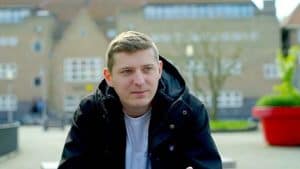
Source: EenVandaagReport after report shows how inequality of opportunity affects them. On average, poor people die seven years earlier and end up in debt and crime more often. “You never let go of class,” says teacher Milio van de Kamp (31) from personal experience.“Inequality of opportunity is a backpack that you carry with you all your life,” says Milio van de Kamp. He grew up in a disadvantaged neighborhood in Amsterdam. “There was quite a lot of violence and poverty at home. My parents also grew up in poverty themselves. My mother was declared ill at a very young age, she had serious heart problems. My father was involved in crime.”Cold concreteMilio never really learned to talk at home. “You kept problems to yourself,” he says. “I've always had trouble expressing myself. The only way I knew was shouting and violence.” And that had consequences. Milio quickly got the stamp of a busy, annoying child and became a jack-of-all-trades at home, he told no one. gestuurd.Dat Nor that they regularly lived without gas and electricity. “My bedroom was on the ground floor and I had no carpeting, just bare concrete. What I like most about that period are those cold mornings when you walked over that bare concrete and had to wash yourself in that cold bathroom with a washcloth with cold water. That's not a very nice way to wake up. Actually, every day, you realize that you're missing some kind of basic necessities.”SEE ALSO
Nowhere really at homeMilio eventually manages to escape from poverty and is now a sociologist and lecturer in social sciences at the University of Amsterdam. Still, he still feels like an odd man out. “I feel like I'm floating somewhere in the middle, I'm not quite at home anymore.” Where I come from, I am the success story. My parents call me 'the professor' and we notice that we interact with each other in a completely different way. At university, I still feel like that guy from the street, talking, thinking, moving and dressing very differently than everyone else. And based on that, I still don't feel at home.”“Blanket of good intentions”Milio wrote the book “Maybe you should aim a little lower”. In it, based on his own experiences, he talks about the impact of poverty and inequality of opportunity. The title is derived from a statement made by a lecturer when he said he wanted to go up from VMBO to university to become a psychologist. “It became the title of my book because that comment is so fundamental to inequality of opportunity,” explains Milio.” People are kept small and this is often very subtle. Actually, the lecturer had my best interests at heart. She was convinced that I would not make it at the university and wanted to protect me. Inequality of opportunity is always somewhat buried under a blanket of good intentions.”SEE ALSO

Number of budget coaches doubled in 10 years: 'But money worries often take more'
Less old and less healthyChairman of the Council for Public Health and Society Jet Bussemaker recognizes Milio's story and the fact that inequality of opportunity lasts a lifetime.” Inequality of opportunity often starts very early in a life course, when your parents are in debt or you live in a bad home,” she agrees. “Whether you are highly or poorly educated makes a difference of 7 years in the number of years you live and no less than 15 years in years of good health.”7 percent of the childrenMore than 1.1 million people live below the poverty line in our country. Unacceptable, says Bussemaker. “7 percent of the children live in poverty. That means you go to school without breakfast and are much less prepared to learn properly.” She believes that there should be a national approach to tackling inequality of opportunity. “Create a national long-term program with plenty of room to choose your own solutions at the district level and prescribe that this is only allowed if it is created together with the citizens themselves.”SEE ALSO

'Poverty literally keeps you small'And it will really take time, Bussemaker insists. “And it requires an approach that transcends themes. We need to get rid of just a project here and there. A project about debts, a project about education, about health. And then also want to see results within a few years. If you really want to do something about this, you need at least 15 years of programs,” says the chairman. Milio van de Kamp believes that policy makers should not only talk about, but especially with, the people concerned. Because poverty gets under your skin. “Poverty literally keeps you small. Physically, mentally and socially.”Continuous stress“I've experienced that myself,” Milio continues. “Your debts create a kind of constant stress in your body. I myself compared that to students who, for example, are waiting to take an exam. Or if you're waiting for a very important result. Those nerves where you literally get sick, you feel them when you're in debt, every day of the week, every hour of the day, and they also just limit what you have.” With his book, he hopes to provide insight and give others like him a helping hand. “Most people like me don't write books. For a long time, I thought: my background has brought me nothing, but I can now also use it for others.”
.avif)