The benefits scandal came to light by official Joop Hack. 'I think fair play is important'


Whistleblower interview
The benefits scandal came to light by official Joop Hack. 'I think fair play is important'
As an employee of the tax authorities, Joop Hack provided documents that revealed the benefits scandal. Six years later, he goes public for the first time. 'I was just doing my job. '
Emiel Hakkenes May 6, 2024, 22:00
Sometimes Joop Hack hears the numbers and amounts come by: 1500 employees at the Implementation Organization for Recovery of Allowances, 8 billion euros to rectify the consequences of the benefits scandal. Then he sometimes thinks: what if I hadn't answered the phone at the time?
But he did, picking up the phone in early 2018, sitting at his desk at the office of the tax authorities in Utrecht that morning. Early, as always. He got up at 5 a.m., he took the train at 6:10 a.m., and he's in the office at 7 a.m. The phone rings at about 9 a.m. Hack is recording. On the line, he has Eva Gonzálex Pérez, a lawyer in Helmond. She is asking for information because of a lawsuit she is conducting. In it, she represents parents in a dispute with the tax authorities. The lawyer suspects that she is missing documents in the file. Can Hack see if those documents are in the tax authorities computer system?
The choice that Hack makes at that moment would change his life and the lives of thousands of “allowance parents”. Yes, he tells Gonzálex Pérez, he could well check that. And he can also send her the requested information.
Thick stripe
What inspired him at that moment? “I think fair play is important,” says Hack (71) now, six years later. “People just have a right to their information. Then you have a fair trial.”
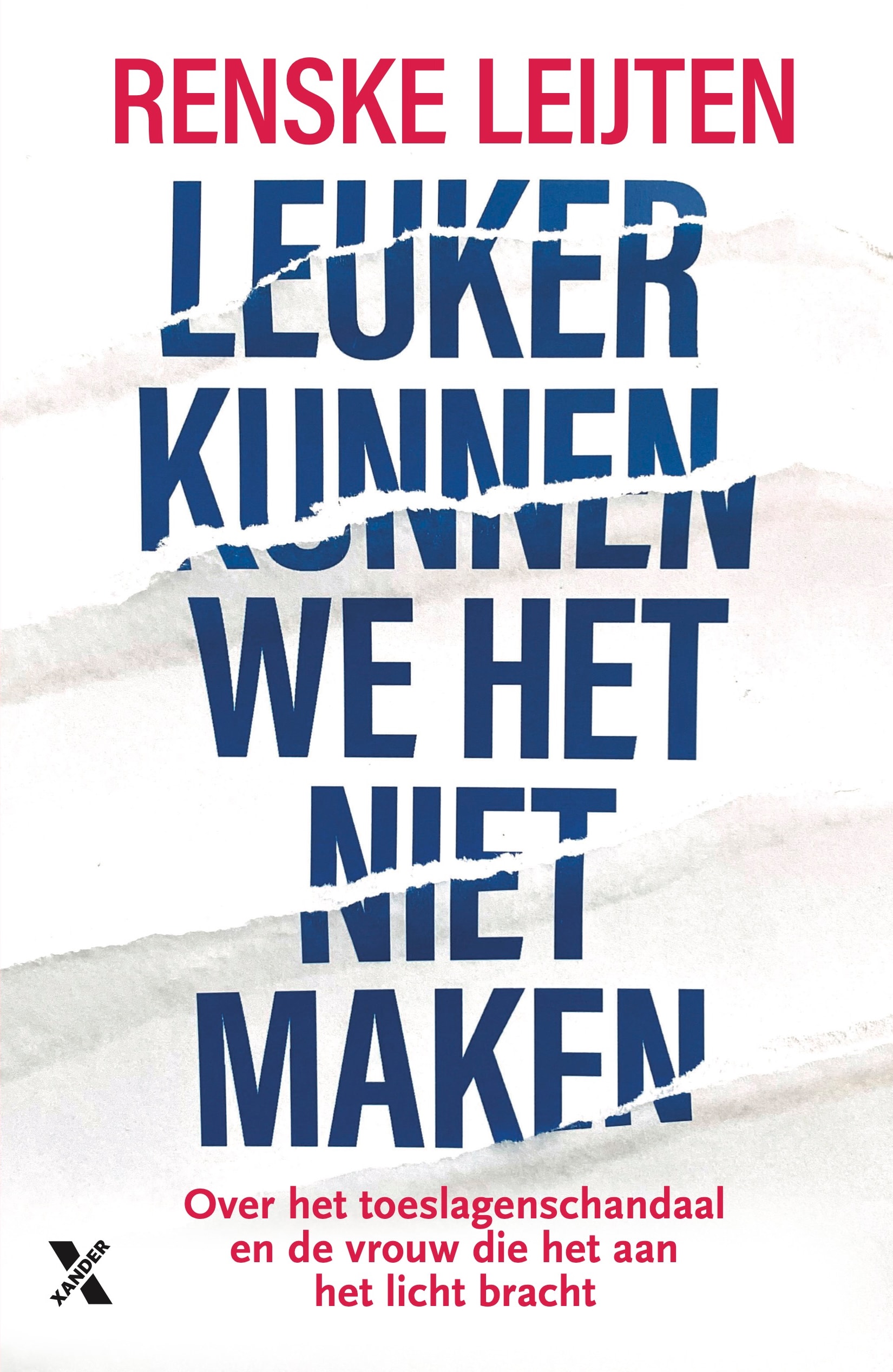
Hack has now retired. He has never spoken out about his role in making the benefits scandal known. That he does that now after all—once, and only in allegiance — for a reason: the book will be published this week We can't make it more fun by Renske Leijten, in which the former SP MP looks back on the benefits scandal, in which she got stuck as a politician, together with colleagues such as Pieter Omtzigt (then CDA) and Farid Azarkan (Denk).
The main role in Leijten's book is played by Eva Gonzálex Pérez, the main supporting role for Joop Hack, an official at the Utrecht tax office.
“I'm doing well,” says Hack, at home in his South Holland townhouse. “I'm no longer bothered by everything that happened. The sleepless nights are over. But the book did take me back to that time. It's a good time to draw a big line under it.”
“Don't sulk, but dock”
Joop Hack has already had a long working life with the government when he ended up at the tax office, in the department that deals with childcare allowance concerns. Hack has a lot of experience dealing with objections; for years he worked at the Ministry of Housing, where he dealt with housing subsidies. The childcare allowance is a new world for him. He has no young children of his own, and he is also shocked by the motto used in Utrecht: “don't sulk, but dock”.
Hack is used to being benevolent when dealing with an objection; for example, if certain information is not provided, he will call after it. If the requested document still emerges, the matter will be resolved. With the childcare allowance, it happens that parents have not paid their own contribution to childcare in one month of the year. Then they were also not entitled to a supplement over that month. In such a case, Hack wonders what exactly is going on and calls the daycare center or childminder: was the child indeed not taken care of that month, or is there another explanation for the missed payment? Other officials don't go that far, notes Hack. They strictly comply with the work instruction that states that, in principle, parental objections should be rejected.
All these rejections in turn lead to hearings, where Hack, as the file handler, sometimes represents the tax authorities. For example, he already meets lawyer Eva Gonzálex Pérez. So when she calls him, Hack knows who she is. She asks for documents from a file that Hack is not responsible for. Hack sees on his screen that the tax authorities do indeed have those documents. The lawyer argues that she could request it through the Public Administration Act, but then they will be too late for the lawsuit from her clients who are now in financial distress.
“That little girl on the line again”
Hack changes tack. He ignores the fact that all contacts with this lawyer should go through the team leader. “She had a reputation,” says Hack. “I've seen phone notes from colleagues with comments like 'that little girl on the line again'.”
Hack wants Gonzálex Pérez to be able to conduct her trial fully informed, and therefore honest. But he also realizes that he is breaking internal rules by speaking to her and providing her with documents. He hopes that his actions will go unnoticed if he does not forward the documents directly from the computer system, but first prints them out, then scans them again and then sends them by e-mail.
It doesn't even take long for executives to become suspicious. At the hearing, lawyers from the Tax Administration were surprised to find that Gonzálex Pérez has documents that she would have received from “a source” at the tax authorities. If that is the case, the lawyers believe, that source is guilty of “serious breach of duty”. The trail quickly leads to Hack. He thought he had erased all his digital tracks, he says. “But they were able to get everything back.”
He is interrogated several times. He is confronted with thirteen emails that he sent to Gonzálex Pérez between February and May 2018.
Return the laptop
“I won't forget the date of February 19, 2019,” says Hack now. “Then I had to hand in my laptop and my access pass.” He is also prohibited from speaking, with anyone, about the investigation that is ongoing against him and that he has been deactivated.
Did it have to come to this? Couldn't Hack raise his objections to the mentality and working methods of the tax authorities (“there was euphoria after a win,” he says, “like: we got them”) with his manager? “That wouldn't do anything anyway. The work instruction was sacred. Colleagues also shrugged and just kept going. I thought: what the hell are we doing here? But the others didn't seem at all concerned about what they were actually doing to people. A claim of 60 or 70,000 euros, due to one missed payment, that's not possible, right?”
No, says Hack, he never considered resigning because of his conscience. “I also just own a house with a mortgage. But if I saw an opportunity to deviate from the work instructions, I did.”
'The tax authorities have disappointed me'
Hack informs Gonzálex Pérez that he can't do anything for her anymore because his resignation is imminent. The lawyer informs the MPs she is currently in contact with — Leijten, Omtzigt, Azarkan. She also informs the media, allegiance and RTL News. In the House of Representatives, Farid Azarkan confronts Secretary of State Menno Snel about the fate of the anonymous whistleblower of the tax authorities. It should be praised rather than punished. “As Secretary of State, you should invite them to your room, you should cherish them, you should love them. What kind of secretary are you, then, if you're going to punish that person? What exactly do you say? '
That has an effect. In the summer of 2019, Hack will be officially rehabilitated. He receives a certificate from the Ministry of Finance praising him for his career as a government official since November 1, 1976. For a return to his old position, Hack kindly thanks; he would rather retire.
Nevertheless, six years later, he still talks about “we” when he means the tax authorities. However, he added: “I always had full confidence in the government. But the tax authorities have disappointed me. Especially the people who worked there.”
But he is doing well now, he swears. His wife thinks a bit more nuanced about that. She blames his heart problems for everything he experienced around the benefits scandal. She thinks he's not the same anymore. She also doubted whether he should participate in Leijten's book and whether he would be publicized about it. Hack herself says: “If you read how Eva worked, you also want to know how she got her information, don't you?”
He himself does not see himself as a whistle-blower. “I didn't notice any wrongdoing. I was just doing my job. I trusted the lawyer and gave her documents that she asked for and that she should have.” But this made it clear that the tax authorities systematically opposed parents and wrongly accused them of fraud.
And what if, at the time of that first call, Hack had been still a young civil servant with an entire career ahead of him? Would he have reacted differently? “No,” he says. “Even then, I had thought: I'm not blaming people. I want to treat everyone fairly.”
The book We Can't Make More Fun by Renske Leijten is published by Xander Uitgevers. 384 pages; €24.99.
Also read:
Politicians make unreasonable demands on allowance parents, judge rules
Can you expect “allowance parents” who borrowed money from family or friends in their financial distress to be able to prove this with a notary deed? No, says the judge.
.avif)