Ellen Pasman: 'National lawyer is the problem wolf of the rule of law'

Ellen Pasman: 'National lawyer is the problem wolf of the rule of law'
September 30, 2024 by Nicole Weidema
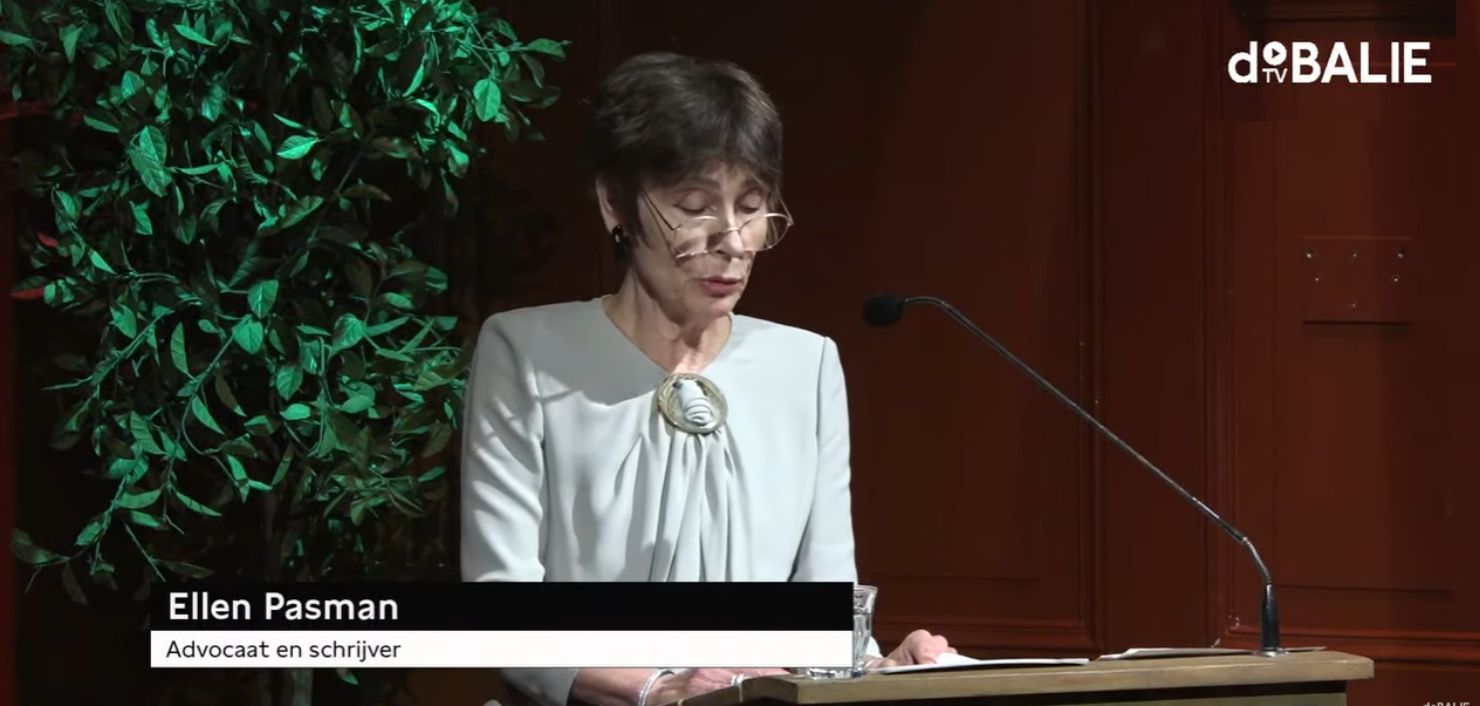
In the first Meindert Fennema lecture, lawyer Ellen Pasman denounces the powerful position of the national lawyer, whom she calls the “silent uncontrolled power in the Dutch rule of law”.The reading is named after political scientist Meindert Fennema, who died last year. He was a champion of freedom of expression and an inspiring lecturer who challenged UvA students for more than forty years. Pasman crossed swords with the national lawyer during her career in high-profile cases. For example, she assisted journalist Willem Oltmans, whose career and freedom of expression had been ruined by the Dutch state for forty years. After years of litigation, Oltmans was awarded a compensation of sixteen million guilders, an outcome that the state and the state attorney were all out to prevent, says Pasman.
Uncontrolled power
Pasman denounces the power that the state attorney has as advisor to the government, without democratic control. “Like any other lawyer, the national attorney advises his clients, tries and litigates on behalf of that client. However, the field of activity is somewhat wider, because the state has many qualities and people ask for advice in all these areas. Officials tend to take advice. Also because they often, and not always rightly, believe that they do not have the specific knowledge in-house and the national lawyer does. The same goes for administrators. Many people have written advice from the national lawyer up their sleeve. Before 2021 and the disclosure of the benefits affair, that advice was rarely or never revealed. We didn't know what it said. That in itself is a democratic deficit. So the national lawyer had an unknown influence on legislation, policy, implementation of the law or decision-making by ministers.”
Legalization of society
According to Pasman, the growth of the state attorney's office — from 80 lawyers in the 1980s to 170 today — says something about the legalization of society and about the government's lack of internal knowledge when it comes to legislation and legal proceedings. “Just last week, sparing appeared to be a partner for a cabinet that does not fully understand the difference between force majeure and incapacity as a special circumstance for the introduction of state emergency law. The same probably applies to the difference between tsunami as a natural phenomenon and a metaphor.”
“Retaining documents, by not providing the entire file, but parts of it to the other party and to the court, is the rule rather than the exception”
In around a thousand proceedings per year, the government is assisted by the national lawyer. In some of these procedures, the government opposes citizens. “Because of the special nature of the client, we are all involved in one way or another. If only because the general costs are advised and litigated,” says Pasman. “So the question is also whether citizens get their money's worth.”
Restraint
Pasman is downright cynical when she quotes from the report of the Silvis committee, which, after the major fraud at Pels Rijcken, was supposed to investigate whether this office could still remain a national lawyer. The committee wrote: “The national legal profession certainly has its own characteristics and problems. These are related to the special position that the national government occupies. In many ways, this requires greater restraint and prudence than is sometimes necessary for non-government clients as a lawyer. They also lie in the complexity of the legal questions that can arise as a result of government action.” Pasman: “You should let that sink in. Reticence and prudence are not the impression left by those who have been involved in proceedings with the state attorney for ten, fifteen, twenty years or more. Restraint in the literal sense does evoke recognition. Retaining documents, by not providing the entire file, but parts of it to the other party and to the court, is the rule rather than the exception.”
Problem wolf in the rule of law
According to Pasman, the state attorney is the problem wolf in the woods of the rule of law. “He jumps over and under the rule of law fences or crawls through a disciplinary framework. Everything seems allowed to serve the client's supposed purpose. No road impassable, no area too complicated, no swamp too swampy. He sinks his teeth into everything; explaining a legal article here, giving policy advice there, or acting openly in court against citizens, companies or other governments. (...) He bites where he can and that's how some accidents happen along the way. And not everyone makes it off unscathed.”
.avif)