How fines became a government business model — and people with little money are screwed

How fines became a government business model — and people with little money are screwed

Economist

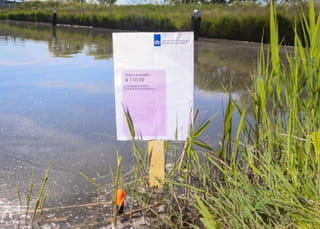
“Do not offer waste in the prescribed manner”, amount: €110, -. Image by Thomas Nondh Jansen (for De Correspondent)
Where people live together, there are rules — and where there are rules, there are fines. But the scale at which people are now getting chewed is unparalleled. We have entered an era of penitentiary.
I'm staring at a flat tire. There's no way I'll get to the physio on time. I'm bummed, I call and ask if it's possible that he'll bill the hour anyway. That's not possible, he says, that would be fraud. He must fine me 65 euros for canceling the appointment too late.
Since I've been a wrote a book about how the traffic penalty policy in the Netherlands derailed, I see them everywhere: fines. Healthcare fines, traffic fines, insurance fines, defaulter fines, integration fines, long-term study fines. And then there are the fines that are not called fines. For example, the parking ticket is disguised as an “additional tax assessment” and the penalty for black driving is a “deferment of payment”.
Companies must also pay fines. This is how Apple called the European Commission last year 1.8 billion euros pay for abuse of power. And governments also pay each other fines if rules are broken. For example, the asylum reception organization COA pays a fine of 1.5 million euros to the municipality of Ter Apel, for exceeding the number of asylum seekers in the application center.* Fines, it seems, keep the world going.
At first glance, there is little wrong with the fine. It is a simple penalty, quick to execute and easy to adjust: the more serious the offence, the higher the amount of money. It is not without reason that fines already exist since the Roman Empire.* Where people live together, there are rules — and where there are rules, there are fines.
But the scale at which fines are currently being imposed is unparalleled. We have entered an era of penitence.
Received en masse
The rise of the fine in the Netherlands coincided with the rise of the computer in the 1980s.
Policymakers were at a loss for words at the time. Traffic became increasingly crowded, and the number of offences increased. Agents did issue receipts, but the criminal justice chain was unable to cope with the number of cases. With a lot of coupons, nothing happened in the end.
People knew that, did not pay and so regularly came under their sentence. That was an unsustainable situation: disastrous for the authorities and road safety.
Due to the rapid digital developments, a solution came into view: digital enforcement and automatic collection. In 1990, therefore, a new law introduced and the Central Judicial Collection Agency (CJIB) was established.
Offences were digitally registered by license plate, the CJIB computers linked this to an address via the license plate register and sent a fine fully automatically. The central “Ticket Processing System” even monitored the response time, sent reminders and was able to withdraw money from bank accounts. All those police officers who had been processing receipts up to that point could do something else.

It worked like a charm: 97 percent of traffic fines were collected, up from 70 percent before.* Nothing stood in the way of the rise of large-scale digital enforcement. Traffic officers with receipt books received reinforcements from speed cameras, route controls and cameras. The number of fines increased rapidly. Were there still 2 million fines in 1990, ten years later, that number had tripled to 6 million.*
The new approach breathed the hip “new public management”: the management philosophy that meant that the government should be managed as a company, focused on output and efficiency, and with citizens as customers. Within this philosophy, modern government saw people as a “homo economicus”: a rational being, focused on maximizing their own interests. It was the government's job to build in financial incentives to encourage those people to behave in the right way.
A proliferation of all kinds of fines
Other policy areas looked at the CJIB's great success with envy. A special government commission was set up to advise on how fines could be used more widely.
In the years that followed, various governments were empowered to impose fines, from water boards to municipalities. It was a win-win situation for the government: maintain more and generate income.
All those organizations imposed fines on their policies. A proliferation of fines followed. Think of fines for speeding (2000), for “fraud” with surcharges (2004), and for not having an identity card in your pocket (2005).
The fine was also increasingly applied within the criminal law itself: it was faster and cheaper than a task or imprisonment. From 2008, the Public Prosecutor's Office was able to impose fines without court intervention. In 2009, the default payment scheme followed, under which people who did not pay their health insurance were compulsorily insured, with a penalty premium of 130 percent.
In 2014, the number of laws with a penalty scheme had already risen to over a hundred.*
The Dutch treasury benefits
Not only were there more and more different fines, they were also getting higher. Between 2008 and 2011 the amounts of traffic fines increased by 66 percent.* The fines in the welfare system were ten times higher in 2013. In 2014, the fines for not filing the tax return on time, misreporting changes in surcharges and late payment of vehicle tax were also imposed. increased.*
The government was strapped for cash at the time. These increases were like a double-edged knife: the higher fines added hundreds of millions more to the treasury and shaped a strict one-off policy for traffickers, offenders and fraudsters.
The last step in the development of the penal society was to optimize the number of fines by imposing them as automatically as possible. For example, the imposition and collection of insurance fines (the penalty someone gets for not having liability insurance for a car or scooter) were automated in 2011, raising the number of insurance fines: from 50,000 to 300,000 per year. The treasury was able to add an additional 100 million euros.*
Municipalities are also making use of the possibilities of digitization. This is how parking attendants became replaced by scan cars. They did not scan 70, but 1,200 license plates per hour. The municipal income does add up.
The penalty policy was at the origin of major scandals
Such a rapid growth of the penal machinery could not be left without consequences. The penalty policy was at the origin of a number of major scandals, the best-known of which is the benefits scandal.
What is less known is how things went wrong in social security and social security. Minor mistakes were already enough to label people as “social assistance fraudsters”, for example when “breaching the duty to provide information”. That was already possible not passing on messages received by a bag.* This involved — and still are — high fines, such as recovering or suspending assistance. This meant that people who received all the minimum were cut and thus ended up below the poverty line.
Things also went wrong when collecting traffic fines. Indeed, traffic fines were not allowed to be paid in parts. People who were unable to pay a fine all at once were faced with sky-high increases, then bailiff costs and, ultimately, often a “hostage situation”.
Hostage taking is a so-called coercive tool. In practice, it means putting someone in jail to force them to pay the fine. The imprisonment therefore does not replace the fine — the blame remains. In 2014, the CJIB made 300 hostage requests per day. In the end, are people ended up in prison for 94,000 fines, even though they often wanted to pay but were unable to. The National Ombudsman mentioned this large-scale human rights violations.*
Fortunately, these kinds of extreme outgrowths have largely been repaired. Hostages for traffic fines have not been carried out for a number of years, the allowance scandal has come to light and the fraud law has been revised. The “defaulter scheme” is now called the “late payment care premium scheme”, because it is now recognized that the term “defaulter” is stigmatizing. The number of people in the scheme is only half of what it used to be. The number of traffic fines is also now lower than in 2013.
So you could say: the sharp edges of the penitentiary era are gone. The possibilities of digitization are being used, the fine contributes to an efficient government, people are even better at following the rules and customization is provided in the implementation to prevent people from getting into trouble because of a fine.
Of course, these developments are good. But if you dig a little deeper, you will see that two crucial shortcomings of the fine have not been addressed: fines have (1) become a business model for the government, making society more repressive; and (2) this is annoying for everyone, but people with less money are twice as screwed.

No turning back
The fact that fines also generate income increases the number and amount of the fines. This is an ingrained dynamic: if a cabinet wants more income, increasing fines or more enforcement is quickly more attractive than raising taxes. That is simply easier to sell to the voter.
Once the step towards higher fines or more enforcement has been taken, there is hardly any way back. It is very difficult to reverse without painful financial choices. The government accountants count on a certain amount of penalty income. If a minister reduces the fines, the deficit must be covered by cuts elsewhere in their own budget.
Last year, this dynamic was seen around traffic fines. In 2023, then-Minister of Justice and Security Dilan Yeşilgöz increased traffic fines to cover a gap in the budget. When the House of Representatives opposed this and passed a motion to reverse the increase, the cabinet did not comply with this motion, “because there was no coverage”.*
Even small decisions are driven by financial considerations. For example, Secretary of State Teun Struycken recently postponed sending a free payment reminder for traffic fines until July 2026, because if people start paying through that payment reminder, they won't have to pay a 50 percent increase. The reduced income from those increases amount to 6 million euros per year — money that was expected.*
Another example. Does someone pay to be not tax, then there is an absenteeism penalty. In the years before the coronavirus pandemic, these fines brought the tax authorities around 300 million euros per year. Secretary of State for Taxation and Tax Administration Marnix van Rij responded to the advice to reduce the absenteeism fines by saying that this “reduces penalty revenues”. According to him, they had to “in addition to the rule of law and the human dimension, the budgetary consequences are also weighed”.*
If no fines were issued in the Netherlands for a year, the state treasury would missing out on one billion euros. In other words: if everyone followed all the rules for a year, there would be a financial disaster for the cabinet. This provides a perverse incentive.
Fines have secretly become a type of taxes disguised as punishment. And that stings. Everyone feels that a government that has a financial incentive to punish as much and as harshly as possible is wrong. It makes the government unnecessarily repressive.
Fines widen the gap between rich and poor
That brings me to the second crucial shortcoming of the fine. Namely, that a fine hits one wallet more than the other.
People or companies with a lot of money can afford to see a fine as a lump sum for breaking the rules. But people with a low income must take out a monthly or even long-term payment arrangement for a traffic ticket — that happens about 385,000 times a year.*
People without money are screwed in the era of fines: not only do the fines make a bigger dent in their finances, they also get them more often because they use support policies that prevent fines (such as surcharges and assistance). The penitential society thus widens the gap between rich and poor.
Over the past decades, fines have become the favorite tool for business, digital and repressive government. Sometimes for noble reasons, sometimes to earn or save money, often a mixture of the two.
Fines penetrate society through various channels, not only with governments but also with healthcare providers, fitness centers and public transport. And no one has a complete overview of how these fines ultimately stack up for citizens and what consequences this has. It is high time for that to change.
.avif)