Ministry of Finance: the tax authorities broke these laws and regulations


NOS News•Saturday, March 13, 2021, 2:30 PM
Ministry of Finance: the tax authorities broke these laws and regulations
Share this article
In response to Parliamentary questions, the Ministry of Finance sent an overview of laws that the tax authorities have not complied with in the past seven years. The 11-page letter contains a selection of cases that are contrary to the law or the general principles of good administration, write outgoing state secretaries Vijlbrief and Van Huffelen. It is not a complete overview.
The letter stems from a motion by CDA MP Omtzigt.
The examples in the Letter to Parliament include withholding documents or providing documents too late to citizens or judges. It also describes how it is made unnecessarily difficult for parents to prove their right to a supplement. The Ministry of Finance states that the tax authorities generally act in accordance with laws and regulations, but that “unfortunately this has not always been the case”.
Enumeration
The vast majority of issues mentioned in the letter have been addressed before, including in debates in the House of Representatives. In particular, the overview of the offences is new. “A serious and long list,” says lawyer Eva Gonzálex Perez. She has been supporting parents affected by the child allowance affair since 2014.
The letter includes a “non-exhaustive list” of situations in which the tax authorities have failed to comply with the law and the general principles of good administration. “That means that there is or is still to come about what the tax authorities have done or are doing in violation of the law,” says Gonzálex Perez. “So there is still no line under it.”
For over six years, the lawyer said he regularly found that the tax authorities were not complying with the rules. “The law was not enforced. This list includes everything they've been made aware of in writing over the past few years.”
According to her, one point is new: point 11, about stopping surcharges in the event of a change in the household. “This method was declared illegal by a court ruling in 2019, but they write that this method is still being followed by the tax authorities even now.”
The list contains little else to reveal, says Gonzálex Perez. “It's the media and politicians that have been doing this for years. It's a constant excavator in documents and bringing them out.”
In a rule of law, the tax authorities must comply with the law. The service also requires that from all citizens. I now want to know very well how much damage this has caused to citizens and companies.
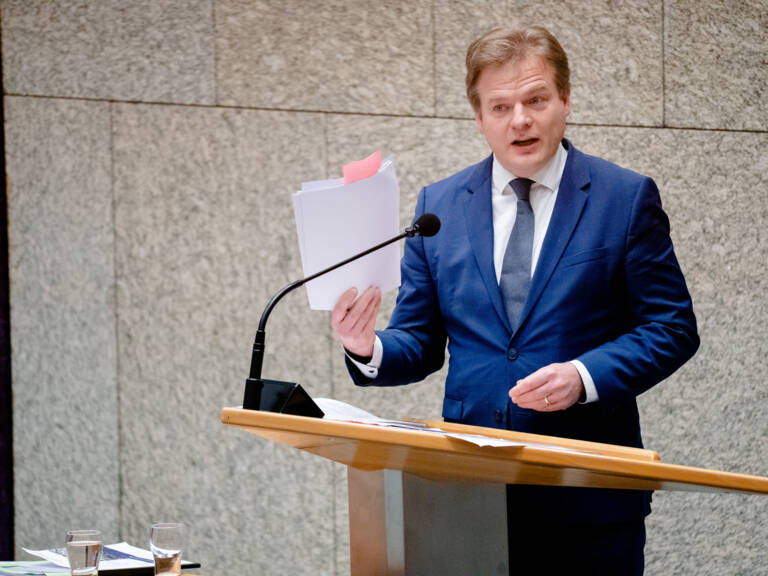
Member of Parliament Pieter Omtzigt
CDA MP Pieter Omtzigt is shocked at the content of the letter. On Twitter, he calls it “a compelling read to understand the lack of rule of law”. He emphasizes in an explanation that this reaffirms that the law was not only implemented too harshly by the tax authorities, as was sometimes the explanation, but that the law was not even followed.
“In a rule of law, the tax authorities must comply with the law. The service also requires that from all citizens. I now really want to know how much damage this has caused to citizens and companies,” says Omtzigt. “This has cost a number of people the entire housing allowance. They lost thousands of euros a year because the interpretation of the law by the tax authorities was not how it should be, according to the highest court.”
He also denounces how long it took for this information to reach the House. “We expected this letter weeks ago, even before the election recess. Now is an awkward time because we can't talk about it with the government right now.”
The letter also shows that the information is not complete yet. Omtzigt also emphatically denies that. “I've been asking for an overview for years and this letter doesn't provide an exhaustive list at the moment.” He wants that list as soon as possible. He also wants it to be clear as soon as possible how long the cabinet had known about this.
Seizure-free foot
Last week concluded RTL News based on confidential documents that the way the tax authorities worked, which led to the benefits affair, started much earlier than was known so far.
The letter to Parliament on Friday evening also responds to the story about the battery-free foot from the NOS. This shows that when settling surcharges, the tax authorities do not usually take into account whether people have enough money left over to live on, even though this should be the case under a law that came into force on 1 January.
The tax authorities confirmed the method and said that when people ask for it, the personal situation will be considered. According to the service, this is allowed under the new law.
The Ministry of Finance says it is investigating how the tax authorities should act. They want to talk to the National Ombudsman and social counsellors.
The examples below concern violations of laws that occurred before the tax authorities, as described in the letter to Parliament.
1. Oral withdrawal of objections
2. Intention/Gross Debt and Amicable Debt Rescheduling (Recovery)
3. Wrongly unreduced prosecution costs
4. Reimbursement of recovery interest
5. Termination of accruing debts
6. AVG and Archives Act
7. Act contrary to the GDPR when processing personal data.
8. Recovery Organization Fees. Situations that have occurred here include:
- failure to (timely) establish the final decision on childcare allowance;
- not or insufficient compliance with the legal period within which a decision to object must be made;
- no or insufficient justification for decisions concerning the granting or rejection of the childcare allowance;
- do not make it sufficiently clear to the parent what information is expected of him/her;
9. 21-point list
10. Technical guarantees
11. Allowance partnership
12. Unfair qualification
13. Child-related Budget
.avif)