Unorthodox measure: Department of Benefits wants to buy off affected parents

Thursday, 16:07
Unorthodox measure: Department of Benefits wants to buy off affected parents

- Bas le Cointre
- editor Nieuwsuur
- Mark Schrader
- reporter Nieuwsuur
- Jan Kleinnijenhuis
- reporter Nieuwsuur
The Department of Allowances, part of the Ministry of Finance, wants to eliminate the enormous number of objections in the benefits affair with a controversial measure. Affected parents will then receive a one-off fee of 5000 euros, provided that they withdraw their objection.
Victims, lawyers and professors who News Hour speaks, are critical. In fact, even officials from the Ministry of Finance, which came up with the measure, speak of an “unorthodox measure” with major risks.
Around 4,700 parents who have been classified by the ministry as “recognized victims” are eligible for the settlement proposal. At the moment, the letters with the proposals are falling on the doormat of the first parents. The ministry is allocating 30 million euros for it and hopes to be able to accelerate the stalled recovery operation slightly.
“Certificate of Incapacity”
The Ministry of Finance expects a settlement to save three months of time. The cabinet recently announced that it will be working to compensate all victims until the end of 2027.
“The recovery operation has completely stalled. This settlement proposal is a certificate of incapacity on the part of the Department of Supplements,” says professor of administrative law Herman Bröring, who sees that the ministry is hopelessly behind in dealing with objections.
These victims of the benefits affair have already received a settlement proposal:
Until the beginning of this month, the service had received just under 12,000 complaints, of which more than 3,600 have now been addressed. The fact that so many objections are being filed is because victims can object at any step in the recovery procedure.
For objections that have not been dealt with in time, the Implementation Service for Recovery of Allowances (UHT), part of the Benefits Service, must pay penalty payments. According to the latest figures, more than 54 million euros were paid in penalty payments up to and including April this year. “I'm not aware that a government enforcement agency has ever stalled like this before,” says professor of administrative law Ymre Schuurmans.
The Ministry of Finance does not want to say what amount of penalty payments has now been paid. Parliamentary documents do state that 86 million has been reserved for future penalty payments.
millions
Meanwhile, thousands of objections are still on the shelf. “The UHT wants to calculate the compensation for each victim down to the decimal point,” says Professor Bröring. “This customization takes far too long and a huge amount of money is being spent on implementation costs.” The UHT is struggling with staff shortages, which means that they are unable to deal with many cases in a timely manner.
By offering 5,000 euros to victims, the Surcharges Department wants to both eliminate the inventory of objections and save considerable costs. Officials calculate in an internal note that dealing with an objection costs an average of 21,500 euros. The savings from the settlement proposal thus amount to many millions.
Victims go through various steps to receive compensation. After a first test, they receive an amount of 30,000 euros. For a higher fee, an extensive comprehensive assessment follows. This specifies, among other things, the years for which parents are entitled to compensation.
The settlement proposal is made to a group of victims who have objected to that comprehensive assessment. But according to lawyers, this assessment is also relevant if victims claim additional damage via a different route. This can be done, for example, through the Equal Recovery Foundation, founded by Princess Laurentien.
Legal Inequality
But in doing so, the ministry is not meeting what victims actually want, says professor Schuurmans. “Restorative justice is also providing space for victims' personal stories, and that's not really happening with this settlement. The proposal is not a solution for parents who want to understand what happened and why they were profiled as fraudsters by the tax authorities.”
Officials are therefore also highly critical of the settlement proposal. This highlights possible legal inequality between victims, legal wrongfulness, overcompensation and delay in regular execution.
Lawyers who News Hour spoke, wondering whether parents have sufficient information to decide on the settlement proposal. The ministry also states in the internal note that it is “uncertain” whether it can provide all parents with a complete file. According to the lawyers, this is necessary to make an informed decision about the proposal.
In addition, officials talk about a possible “accountable wrongfulness”, which means that there is no legal basis for the additional costs that are incurred.
Secretary of State's response
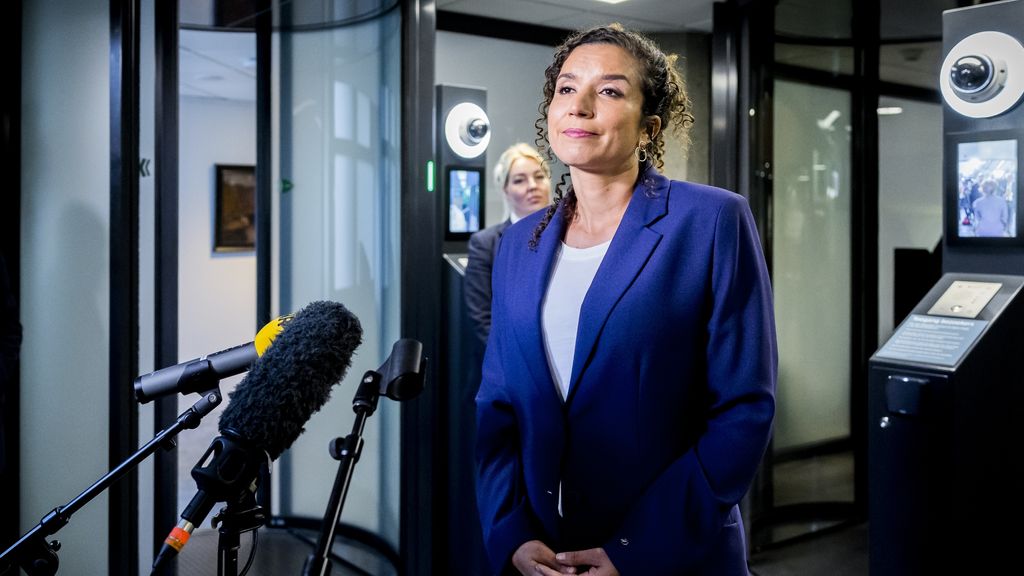
Despite all these objections, former Secretary of State Aukje de Vries and the House of Representatives agreed to the proposal in June this year. The current Secretary of State, Nora Achahbar (NSC), says against News Hour that she finds it “very sad” when the settlement feels like buying off for parents. “That's really not the intention.”
Achahbar insists that it is a voluntary offer that parents can also decline. When dealing with the earthquake file in Groningen, a similar settlement proposal worked well, she says. “Then it led to an acceleration of the procedure and shorter queues”.


.avif)