Main characters
The Dutch Tax Scandal
Renske Leijten

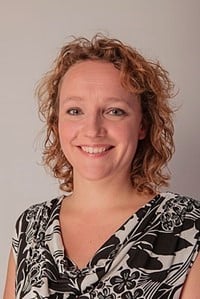
Renske's roots lie in Haarlem. Her parents are social workers who combine living and working. For a few years, the Leijten family lived in a family home, where they take care of adolescents who are no longer able to live at home. Mother Tineke: “She was very impressed with one of her brothers. That was a little boy from Suriname and he had lost his arm there. While that would not have been necessary at all, but the health care there was not adequate enough. That kind of thing kept Renske very busy.”
Another important source of inspiration is her Catholic upbringing. Renske's confirmation booklet from June 1992 contains a creed that still characterizes her: “I will not believe in the law of the fittest, in the language of arms, in the power of the powerful. I won't believe in race or wealth, in privilege, in the established order.”
During her time as a student in Groningen, Renske became politically active in ROOD, the SP's youth organization. Studying, campaigning, working in the mail sorting center and going to the pub; Renske has no shortage of energy and ambition. Jan Marijnissen brings her to The Hague, where she works as a group employee. After the SP's monster victory in 2006, she got a seat in the House of Representatives, where she gets stuck in difficult health care files.
For engagement and passion, parliamentary journalist Kees Boonman gives her a 10: “She's really involved and knows real people, in a way you don't find with many politicians in The Hague anymore.” But that also has a downside, because the Hague's snake hole breaks hair up. Just before the 2017 elections, she is considering quitting, away from The Hague, but when she speaks to those affected by the benefits affair, it is clear to her that she should stay. Pieter Omtzigt: “The conversations she had, that was really tough, with parents who were completely desperate. And in the meantime, the government set out as the fierce Renske from the opposition who is always looking for something behind something.”
Victim Maria Sanchez can text her day or night, but she has advice for Renske: “Take care of yourself, otherwise we will be lost without reason.”
The Allowance Affair has put Renske Leijten on the map as a politician. She is now receiving praise for years of tireless effort. What will her future look like? Will she leave The Hague behind and opt for a position where she can decide what happens or will she remain in opposition to put the current government under fire?
Today we speak in our series of interviews with interesting and inspiring people: Renske Leijten. She grew up in Haarlem and obtained the propaedeutic in Political Science at the Uva after VWO. However, she decided to take a different path and subsequently completed her bachelor's degree in Dutch Language and Culture at the RuG.
During her student years, Leijten became active at the SP youth organization ROOD. From 2005 to 2007, she was chairman of that organization. She has also been a member of the SP's executive board since 2005. At the end of November 2006, she officially became a member of the House of Representatives on behalf of the SP. At the beginning of her time as a Member of Parliament, she was responsible for youth affairs and health care. Since the Parliamentary elections in 2017, she was spokeswoman for Finance, EU and Europe on behalf of the SP Group.
Together with Pieter Omtzigt, Leijten brought the benefits affair to light. For that, she received the audience award. Political Achievement of 2019 awarded. Last year, she was part of the Parliamentary Childcare Allowance Interrogation Committee, which ultimately caused the Rutte III cabinet to fall. She lives in Haarlem with her husband and two sons and was active on the board of the Haarlemmer Wood Festival there until last year. We spoke to her about persecution of the tax authorities, the administrative culture in politics, the climate and ill-informed MPs.
You were one of the pioneers in bringing the benefits affair to light. How are things now?
“What has happened is that for years, the government has not seen people as individuals, but as fraudsters. When you hear the Secretary of State talking about the affair now, it's all going very well. However, the parents say otherwise. Yes, people have been helped and some are out of trouble. There were also people who did not have much damage and were able to get on well with the money that became available.
That's nice, of course, but for many people who fight from the start, the end of the problem is not yet in sight. They are all in a bureaucratic mill and many of them are really still living in poverty. The holidays are going by their noses. Fundraisers have even been set up by other parents to ensure that those people get some financial support. It's sad that that's still necessary.”
A lot is currently being published about the blacklist by the tax authorities. Can you tell us a bit more about that?
“The tax authorities kept a list containing the names of people suspected of fraud. There were 270,000 people on that list. They are now all receiving a letter saying that they were unlawfully on that list and the Secretary of State has announced that there will be an allowance scheme. We don't know what the arrangement will look like yet. The main problem, however, is that we do not know exactly how the system worked and who was affected. After all, it was not just about surcharges, but also about regular tax matters for individuals and SMEs. All investigations are still ongoing. That annoys me, because it's been two years since the investigative journalists from allegiance and RTL News have made this public.
An additional problem is that there are signs that the data from that list has been shared with other governments. If so, it may well be that something went wrong with, for example, the municipality or the UWV instead of with the tax authorities. We don't know. That's the frustrating part: a lot is probably already known behind the scenes, but both the House of Representatives, journalists and other residents of the Netherlands won't know that.”
A while ago, lawyer Vasco Groeneveld started proceedings to prosecute the tax authorities. That procedure was dismissed. Do you see any leads for suing the tax authorities?
“I'm a representative of the people, so I have political resources. I think that legal proceedings really belong in the field of law. I can't tell the Public Prosecutor to go ahead and sue the tax authorities. Nor can I say that I think that a certain gentleman or woman should go to court, and certainly not what punishment they should receive.
I do understand very well that the parents who supported Groeneveld say they do not agree with the way things are going. I understand that they would like the Public Prosecution Service to prosecute and therefore submit that request. I can well imagine that in their situation, you want to at least be looked at by a judge and for that judge to rule on that.”
A number of directors at the tax authorities, who were involved in the benefits affair, have now been given another position. For them, the affair had no consequences. What do you think about that?
“I find that very sad. It would be very good if everyone looked at themselves in the mirror and wondered how this could have happened. Judges have done that: they have apologised and admitted that they did not look at the parents independently enough. The Council of State has also pleaded guilty. An international study was even conducted into the state of affairs in our rule of law. I haven't seen that reflection at the tax authorities yet.
Here, too, I am not going to say “she has to go and she must go”, but I do find it worrying that there has not been a single dismissal. Especially when you consider that the whistleblower has indeed been brought to justice. While we in the House of Representatives just said that was not necessary. I find it difficult to speak out about it, because it's not really supposed that a Member of Parliament is about personnel policy. Nevertheless, I am concerned that there have been no personal consequences.”
Last year, quite a lot of information was leaked about the formation. In terms of administrative culture, not much seems to have changed. How do you view that culture?
“The governance culture is quite a popular term and everyone means something different by it. What matters to me is transparency and honesty. Something can go wrong, but then you tell it honestly and repair the damage. You therefore ensure that the damage is not too great. The moment you make a decision that you think “this is not beneficial for society”, you should not hide it. It is often the case that it is made difficult for local representatives to say no. You are being pressured, which damages trust. Transparency — showing what you do and why — is therefore extra important.
In The Hague, one of the major problems at the moment is that the government sees opposition MPs differently than coalition MPs. If a question comes from me or a direct colleague from the opposition, it is seen as hostile. While it is sometimes the case that we ask a question that can lead to the uncovering of an error. If that mistake is confessed and corrected, we can move on. We need to get rid of the administrative culture that involves two hostile parties. I strongly hope that the new coalition will break that pattern.”
MPs often post messages on social media that they are not properly informed and that debates are not always organized in a tight way. What about that exactly?
“We sometimes get so much information that you can't see the forest for the trees. Occasionally, it also concerns topics that the rest of the country is not working on at the time. It is then hoped that the storm will blow over. It has everything to do with the honesty and transparency that I just mentioned.
I always say it would be useful to have a register for government documents so that everyone can see what documents there are. It really doesn't need to include contact details for officials, but an overview of what happened would certainly be useful. There are plenty of countries that already use this system and they are all going well.
As far as debates are concerned: lately, it has been very much about the form, about how the MPs interact with each other. I would like to talk a little more about the content again, because that's what it should ultimately be about.”
The term “Rutte Doctrine” is becoming increasingly familiar. Do you think that will end with the new cabinet?
“I hope it comes to an end. That no more documents are being withheld from the House of Representatives because it is better for imaging. It should be about content, not imaging. However, it is even broader than just Rutte himself: it is actually a culture that currently prevails in politics. Everyone understands that mistakes are made, but they are knowingly withheld. We have to get rid of that.”
One last topic: the climate. You are actively working on that. What can we expect from the SP in this area in the near future?
“We are aware that global warming is due to how we produce and distribute things now. We don't want to individualize that problem. A better world does not start with ourselves, but with companies like Shell. We see that thousands of billions per year are still being invested in the fossil industry worldwide. As long as that continues, it doesn't matter how sustainable and organic we go about it. The problem will then persist.
That is why we as SP say that something mainly needs to be done when it comes to those investments. Pension funds, banks and governments can all contribute to this. That will be the fight we are going to fight. We break with the “if you do something yourself, it will all work out” story and show that it is a system discussion.”
Finally, do you have a message for the readers of this interview?
“I get that you're thinking “what else am I going to do with The Hague, those people are only talking about politics themselves”. At the same time: if you turn away from that, what's the alternative? If you don't vote, someone else will decide for you. You can also speak out outside of voting, by joining a political party or participating in local demonstrations. Democracy requires everyone to be sharp on everything and to organize things together.
What I am concerned about is that in municipal elections recently, there was only a turnout of thirty to forty percent. That is a minority, which then decides for the majority of that municipality how to proceed. Nationally, the numbers are better, but there are still a large number of people who do not vote. You then leave the future of your country to others. I think that's a thing and I'm therefore working out how we can ensure that our democracy is even more of us all. I hope everyone wants to participate in that.”
On Saturday, February 19, the paper version of the hero story about Edwin Plinck — victim of the benefits scandal — was presented to Renske Leijten in De Drie Linden in Prinsenbeek. In addition to them, there were two other speakers.
In December, Edwin appeared in BredaVandaag as Hero of the Month. From that moment on, the extended version can be downloaded from this website. The paper version includes the 2020 magazine and the 2018 book “Goed Volk”.
Photographer: Maartje Verheijen
Edwin was registered by Renske Leijten and Inge Verdaasdonk, who both have a lot of information about this scandal. As a result, they know many victims. After the story was published digitally, the SP sponsored the paper version.
The fact that the award ceremony was not political was evident from the fact that mayor Paul Depla was present as the first speaker. He found it important that the government and officials not only look at the rules, but certainly also at the purpose behind them.
Anita van der Helm said that what happened to Edwin can happen to absolutely anyone. Edwin then chooses to be there for others after all. In doing so, he makes the world a more equitable place. And that's what people want when you look deep into their hearts. The mini-book tells you how to do that.
Edwin himself was the third speaker. He especially thanked his parents, in-laws and girlfriend. Paul Depla received a box full of delicacies from him as a symbolic gesture, because the municipality of Breda does a lot for the victims of the benefits affair. Renske and Anita also received such a package.
Finally, Renske Leijten talked about the history of the benefits scandal. She also called for voting mainly in the municipal elections, for whatever party. Because people from disadvantaged neighborhoods vote too little, which is why the people from better neighborhoods have the say. Something like a benefits scandal can then recur much more quickly. She asked Helden Van Breda to participate in this call to vote, precisely because Helden van Breda has ambassadors to all parties. Because Heroes belong to everyone.
.avif)