Ten years of “allowance and malaise” at the tax authorities

NOS News•Tuesday, May 19, 2015, 6:40 PM
Ten years of “allowance and malaise” at the tax authorities
The major reorganization at the tax authorities, which means that around 5,000 employees will have to find another job, comes after ten years of ICT and organizational setbacks. “Politics has asked too much from the officials at the tax authorities,” say several stakeholders.
2005:
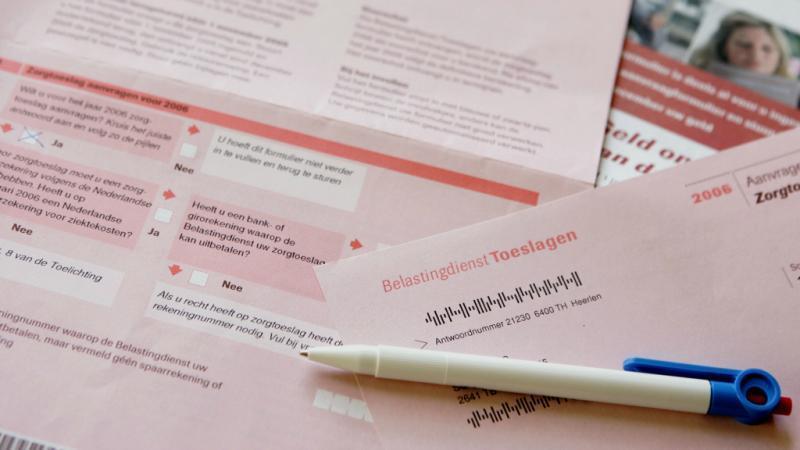
“The tax authorities will be the service of income,” said Secretary of State for Finance Joop Wijn enthusiastically in 2006. His party, the CDA, has wanted for years not only to let the tax authorities collect money, but also to distribute money to people with a lower income. The tax authorities will precede from 2005 pay surcharges for care, rent, childcare, etc., and check that afterwards. Until then, income-related regulations, such as the housing subsidy and the health insurance fund, will be paid out by various authorities and ministries.
2006:
The first problems of the new allowance system are becoming visible. It appears that 52,000 citizens did not receive their rent or care allowance on time at the end of 2005. It's just 1 percent of the total, but the consequences it has for individual families mean that the phone is red hot. In addition, 460,000 citizens were paid too low or too high an advance.
2007:
The General Court of Auditors does research to the ICT system for rent and care allowance. It was designed and built between the end of 2003 and mid-2007, and in June 2007, the tax authorities decided to replace the system. It is not stable enough and can only be modified at a very high cost.
2008:
Director General Jenny Thunnissen, the top official boss at the tax authorities, is resigning. According to Prime Minister Balkenende, her departure has nothing to do with the problems with the tax authorities, but in fact, her position has become unsustainable. That year, 730,000 digitally completed returns were lost due to an error in the systems. CDA Secretary of State De Jager announces a reorganization of the ICT department.
2009:
Under the leadership of Secretary of State De Jager, the tax authorities are returning somewhat calm. Thunnissen was succeeded by Director General Peter Veld, who believes that politicians have let the service carry out various measures too much and too quickly. He wants to lead the organization more tightly and put the ICT systems in order. The goal is more tax revenue and fewer errors. He already gained this experience at the Immigration and Naturalization Service.
2010:
Fraud with the childcare allowance appears to be taking place on a large scale and by organized criminals. The criminals apply for the allowance for themselves and others based on incorrect information. Because its accuracy is only checked afterwards by the tax authorities, they collect large amounts. VVD Secretary of State Weekers announces a fraud investigation on. In 2015, this will lead to a fraud case involving 32 childcare agencies.
2011:
Once again, it appears that fraud involving surcharges is childishly easy. Hundreds to thousands of citizens appear to have used their DigiD by others and that the tax authorities did not check whether the applicant owned the DigiD.
2012:
Meanwhile, the tax authorities are continuing to reorganize behind the scenes, because politicians want the service to also make cuts. A larger group of employees will be involved in monitoring, combating fraud and improving returns. Tax offices across the country are being closed. Behind the scenes director is general manager Hans Blokpoel, against the aging workforce runs. He promises to check for enforceability all tax revisions that politics wants first.
2013:
RTL News reveals that there is widespread fraud with surcharges by Bulgarians. They are taken by bus to the Netherlands by criminals, apply for all possible surcharges with their details and leave for Bulgaria with a premium. The criminals pocket the surcharges. It is almost impossible for the tax authorities to get the money back. Part of the House supports a vote of no confidence against Secretary of State Weekers. The House finds him too lax.
2014:
Secretary of State Weekers resigns due to errors with surcharges. After the Bulgarian fraud, it now appears that tens of thousands of people wrongly did not receive a supplement. The opposition parties find Weekers' answers about the errors insufficient. They are also no longer confident that Weekers can still manage the entire process at the tax authorities. Coalition parties VVD and PvdA do support Weekers, but they conclude: “I don't feel that I have broad support in the House.”
2015:
State Secretary Wiebes announces a major reorganization on, forcing up to five thousand employees to find another job. Thanks to newer ICT, the tax officer's work is increasingly looking like data analysis. This means that work is becoming more complicated for staff who are still largely aging.
At the moment, politicians are considering a major tax reform, which may be implemented in the coming years: a reduction in payroll tax, a new VAT system, the cancellation of surcharges; everything is being discussed. It is already certain that before anything changes, we will first check whether the tax authorities will not face an impossible task.
.avif)