The benefits scandal forced Remy into prostitution at the age of 15: “Needed money for food”

Sunday interview
The benefits scandal forced Remy into prostitution at the age of 15: “Needed money for food”
By Marianne Lucieer·4 May 2025·Updated: 4 May 2025

RTL News
Remy van Aanholt is 14 years old when one blue envelope after another falls on his mother's doormat. The family is already struggling, and as a victim of the benefits scandal, it is certainly no longer possible to tie the strings together. As the only man in the house, Remy feels compelled to enter prostitution at the age of 15. “I felt compelled to take care of my family.”
Remy (now 31) had, as he himself calls it, 'an unstable childhood'. He was born in Curaçao as the son of a teenage mother with a mild mental disability. “She was 16 and completely unable to raise a child,” he says at the dinner table of a beautiful new-build apartment in The Hague. “We lived with my grandmother, there were no rules.” When he was about four years old, his other grandmother took him on vacation to the Netherlands. There she left him with his aunt, who — in his words — ran a “dictatorial” household. “I suddenly went from no rules to a lot of rules that were harshly enforced. And when something went wrong, I was usually blamed.”
Abused
It's about two years later, he thinks, when his mother comes to the Netherlands and takes him away from his aunt. “The two of us went to live in Rotterdam. But things went from bad to worse there.” According to Remy, his mother was “just busy with men and parties.” At that time, he was abused by an uncle at an aunt's home. When his school called Child Protective Services because his mother kept not picking him up, his grandmother came to the Netherlands to take Remy's custody.

“I went to live with my grandmother in Leidschendam-Voorburg. But my grandmother had left everything behind in Curaçao. Here she had no income. We lived in an old, dirty house with lots of pests and there was often no money for gas, electricity or good food. I really love that my grandmother did that for me, but it certainly wasn't easy.” His mother also moved in with Remy and his grandmother not long afterwards. But that only added to more problems. “I was really upset about what she did to me. The neglect, but also the abuse — I think she should have prevented that. I did not accept her as a mother, which caused a lot of tension in the house. In addition, there were tensions between my mother's family and that of my father, who was no longer alive by now. His family found my mother and grandmother unfit to raise me — they may have a point afterwards, although I was no better off with my aunt.”
Special Education
Because Remy had learning problems because of the whole situation, he was obliged to switch to a special education school, and then to practical education. “They thought: the boy can't do anything, just put him at the lowest of the lowest,” he describes his feelings about that. Meanwhile, when he was 13, his mother had a daughter with another man. Five years later, another twin would arrive, from yet another father.

“The problems with benefits arose around childcare for my eldest sister,” he looks back. “There were more and more letters from the tax authorities, but we already had hardly any money to buy food. Our phone and electricity were also cut off every so often because my grandmother and mother were unable to pay the bills. So it was not possible to pay off the 'debt' with the tax authorities at all, so we got further and further into trouble.”
One big blur
In addition to his school, Remy went to work at La Place as much as possible to help pay for the household. But it wasn't enough. “The moment I decided to offer myself up on escort sites is one big blur, just like my first customer. I think I've supplanted that. But I did, I signed up to various sites where men and women could make paid sex dates. Most often, men who were married and had children responded, but there were also women and (straight) couples. Did they know I was 15? Yes, my name was a 15$ boy, so they must have known that.”
“If I didn't go along with the customer's - sometimes extreme - wishes, I wouldn't get any money.”
“I didn't want to do this at all, but I didn't see any other way out. My grandmother and mother kept asking for money to buy food for my sister or to be able to pay for the gas or the phone. And I was the man in the house, I felt obligated to take care of them.” Afterwards, Remy knows that he froze that first time. During sexual abuse as a child, he had learned to switch off his feelings. “I've continued to do that with every escort appointment. It was the only way to keep it up.” He doesn't remember a customer ever asking him if he was okay with it. “Some of them were nice, but most of them just thought I should do what they said. That could be very extreme: tying up, scolding, hitting — very derogatory. If I didn't go along with it, I wouldn't get any money, they said. And I needed the money so much.”
Away for nights
For nights, Remy stayed home to earn money. He blames his mother and grandmother for letting that happen. “A 15-year-old boy who stays away from home for nights, that's not okay, right? My grandmother says she did ask where I was at the time, but I don't remember. And if that was the case, I don't think that's enough.” They also never asked where the money I gave them came from, sometimes 100 euros, sometimes 500, but later I realized that it could be because of poverty: people who have so little money have no space in their heads to think about anything other than how they get food that day and pay as many bills as possible. But it's painful that I was able to do this for years without them doing anything about it.”
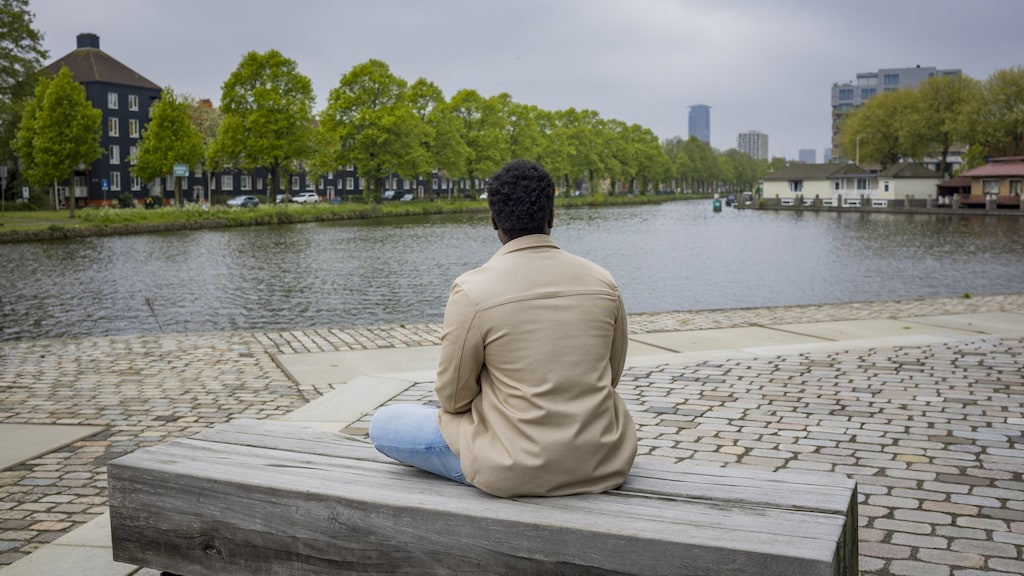
Despite his job at La Place and his work as an escort, Remy managed to get remarkably good grades at school for “someone who can't learn”. He went from practical education to MBO, then to higher professional education and eventually completed a university master's degree in public administration.” I had an enormous drive to prove that I could do something, and not become like my mother. I thought: the better the education I complete, the greater the chance that I will be able to find a good job and build a good life. I wanted nothing more than a stable life. Afterwards, I also closed my feelings about that, mainly the tiredness, and I just persevered.”
Hope of debts
Remy continued with escort work until he was 23, and had been living on his own for years. “Work made me feel dirty and inferior, but I didn't know how to quit. I had to pay for everything myself: my studies, my room, my food, and had also received a lot of debts from home. If my mother and grandmother had been unable to pay the phone bill several times and were closed, they opened a new account in my name; which, of course, they couldn't pay either. Stopping escort work was therefore not an easy choice, and not a button that rang or anything. Slowly, I managed to get away from it and find better work.”
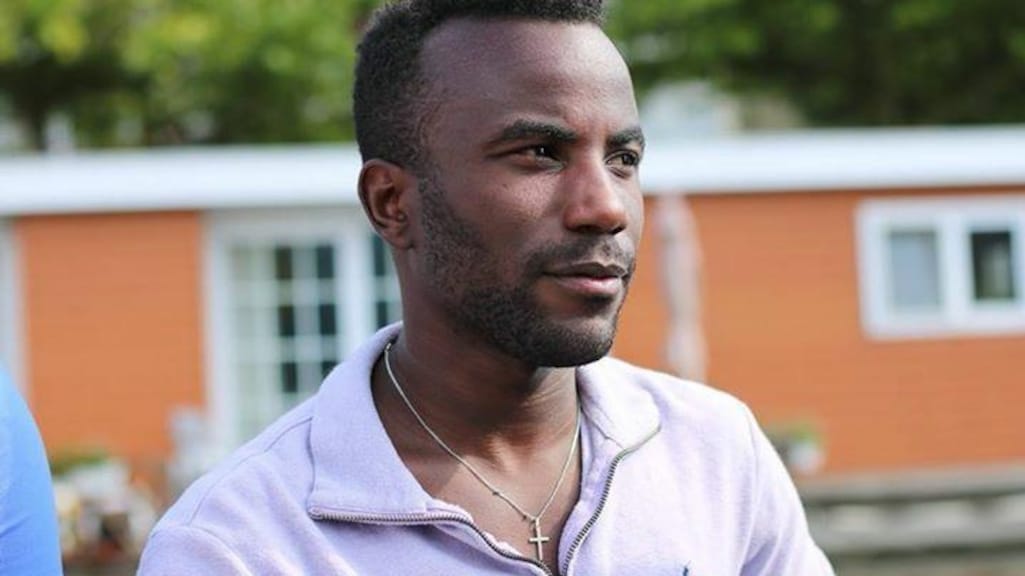
“What also helped was that I got less and less escort work because I was 'too old' for many clients after I was 20. That sounds crazy, but a lot of men who make sex dates that way are apparently looking for very young boys. I was clearly a man by now — so no longer interesting.” Remy told his story to a friend, who was very understanding. “He was very sorry that I had been walking around with such a secret all these years, and said: why didn't you ask me for help when you were struggling? No judgment, just understanding. I loved that so much that I then dared to tell it to some other friends as well. They all reacted the same way.” At 23, he finally quit escort work.
“I got less and less escort work because I was 'too old' for many clients after I was 20.”
“For two years, I've known that I've had complex PTSD from my childhood and working as an escort. I went to the doctor at the time because I thought I had a burnout. At that time, I was working at the Social Economic Council. I became very tired, forgetful, unable to process information and was very afraid of incentives. I went to the doctor and he advised me to take a few weeks off, and then again. When I didn't feel better after that, he referred me to a psychologist.”
Complex PTSD
“He started asking about my childhood and what I had experienced. I thought it wasn't too bad, but when he told me I have complex PTSD and listed its symptoms, I couldn't deny it anymore. The tiredness, nightmares, suicidality, irritability and extreme alertness. I also did everything to feel nothing, like exercising a lot.”
“Fortunately, I've never used drugs or alcohol, as you often see with people with trauma, but my relationship with exercise and eating wasn't healthy. If I ate something unhealthy, I had to exercise a lot; I was very strict with myself.” And I had a disrupted relationship with sexuality because I had never learned what my limits are and what I like. That's why I often did what others expected of me, but didn't like cuddling or other loving touches at all, for example.”
Dear girlfriend and mother in law
2.5 years of therapy later, Remy now dares to say that he is doing well and he is happy. “I have a really lovely friend and a lovely mother-in-law. I'm good at listening to people now, I exercise but no longer obsessively, I can enjoy a piece of chocolate, do yoga, I enjoy working in the vegetable garden on my balcony. I have a good life.”

“Over the past few years, I've really had to discover who I am. You normally do that in adolescence, but I never had the space for that. Why do I do the things I do, how much does this belong to me and what is the result of the traumas? My girlfriend — with whom I've been in a relationship for 4.5 years now — has supported me enormously in this. She is a psychologist, but of course it wasn't easy for her either. I wasn't always nice to her because of the trauma. For example, I could react very harshly for nothing. I find it very special that she stayed with me and did this with me. And my mother-in-law has always supported me, she feels the most like a mother to me, which is very valuable.”
Contact disconnected
Remy has cut off contact with his own mother. “The family relationship was too disturbed. When I was a teenager, I had become a kind of social worker for my family: I solved the problems when that was not my job. In a way, that made me stand above my mother and grandmother, and I don't believe that can be fixed.” He still sees his grandmother, although he tries to protect his borders there. “She often wants me to do or solve things for her, just like before. I say no to that more often, even though it still involves trial and error.” Remy now works as a policy advisor at an employer organization, but would rather mean something “on the other side”. He is busy applying for jobs. “I want to make a social impact; work for the people who are weakest: victims or minorities, for example.”

His mother has now been recognized as a victim of the benefits scandal and thus he has been recognized as the “child of a victim”. “I received a letter from the ministry that said it, and 10,000 euros for all the suffering. Well yay. Of course, the debts and damages are much greater than that.” He has therefore met with other children of victims at the ministry to indicate how extensive their problems are due to the scandal. “We also want to be recognized as victims, not as children of victims. If you also hear the stories of others who are in debt, have not been able to finish their studies or, because of the scandal, have mental health problems that prevent them from finding jobs; we are just as good victims as our parents. And as a victim, you are legally stronger than as a 'child of'.”
Steady and happy life
He tells his story because he believes it's important for people to talk about their mental health problems — including men. “Many men who were abused or abused as children develop - if they don't process it - become addicted or become perpetrators themselves. It's so important that they know they can get help and talk about it. I hope to show that they are not alone, and that with help, it is possible to build a stable, happy life.”
.avif)