Tax authorities struggle with abuse

Tax authorities struggle with abuse
The Surcharges Department will reduce surcharges itself in case of incorrect requests from citizens who do not respond to calls.
By Thomas van Ossenbruggen and Niels Rigter
1 hour ago in Inland
The Fees Service will itself reduce surcharges for citizens who do not respond to calls and letters asking them to change their data. The trial among 12,000 people should prevent them from having to pay back high amounts of overpayments later.
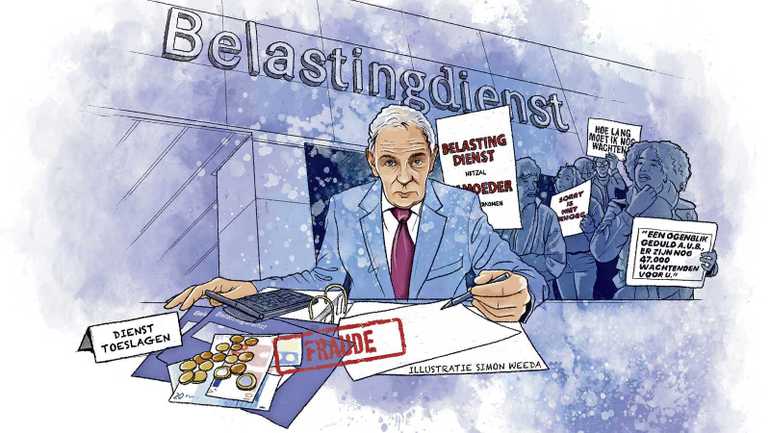
It is a risk, because after the benefits affair, the service wants to be customer-friendly. At the same time, there is a similar group of around 200,000 benefit recipients who give up too low income or too many childcare hours and leave pay to change their data unanswered. Because surcharges are paid out as advances and are audited afterwards, they must repay higher amounts later. Sometimes it is not possible to return. It is expected that the Service will not be able to recover around 300 million euros in many surcharges received this year.
Abuse
The Department of Benefits is in its stomach with abuse. In doing so, the executor fights with one hand on the carpet, because the service does not want to be a bully for the benefits affair. An impossible dilemma.
The tax authorities after the benefits affair are guilty in the sight of the outside world, disarmed and busy reinventing themselves.
During the affair, the department at the tax authorities was responsible for the allowances for 900, mostly low-paid employees. The Allowances Service, founded in 2021, now has 1,500 people, higher educated structures, to pay out and control benefits. They no longer follow mere instructions, but must be able to control and stretch rules and laws as they see fit. They must “push themselves to the limit” to solve problems for citizens. The mantra is “citizen first”, “everyone gets what they deserve” is the promise.
Customization and mass production
A tour of directors and employees created an image of a service full of dilemmas. They have to provide customized solutions and mass production. They must be customer-friendly, but also strong in applying the rules.
On the one hand, the rules are sometimes still rigid. Like the housing allowance. It is mentioned, for example, more important or reclaimed if people are registered at an address who do not live there, even if the main tenant can't do anything about it. “The request is powerless,” says an employee. “We are not allowed to contact non-residents because of the privacy law.”
Or get a mom with multiple kids who leave home without unsubscribing from mom. Often there is a family quarrel. Only after an extensive address survey can the municipality deregister the children living away, but then the mother must repay all housing allowance. The problem is all the more important now that more people are moving in together due to the housing shortage. This has direct consequences for the amount of someone's allowances.
The Allowances Service no longer wants to trick people, but is becoming difficult to detect errors and tackle fraud.
See also:
Bond Taxpayers wise after benefits scandal: 'Citizens are underprotected'
Arrest
Last week, the arrest of a 61-year-old man from Dordrecht showed that the fraud is still occurring. The man is convinced that he has earned money by requesting benefits for others. The cabinet previously chose the House of Representatives that it had received multiple signals from “external parties”, including DigiD app manager Logius, of “misuse of surcharges in an organized context”.
For example, multiple DigIDs were used from a few IP addresses. It would involve around 2,000 citizens, mostly from abroad, with the name from Bulgaria. Online 'recipes' for rustling surcharges from abroad were also shared. In addition, there were reports of false registrations with municipalities, false leases and requesting surcharges through intermediaries. The first signal was reported as early as October 2022.
See also:
Fraud detection tools
There is a reason why only one arrest has been made so far. First of all, the Allowances Service now has far fewer resources available to detect fraud and before the benefits affair, which counts as a “watershed” for everyone involved.
“The secret service doesn't even have the powers we had at the time, so to speak,” says a source at the tax authorities. For example, they used anonymous social media accounts to browse. Individual employees may freely share data about taxpayers and compile their own files and create “perpetrator profiles”.
Continue reading below the photo.
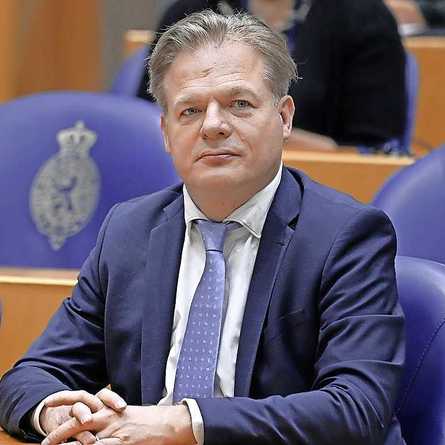
Pieter Omtzigt is really into the benefits affair, where citizens were erroneously indirectly as fraudsters who received benefits unfairly.
Until March 2020, the usual Fraud Signaling Facility (FSV) service was used for the benefits affair. This was an application that transmitted “risk signals” to employees. They can add risky characteristics such as origin, occupation, charitable donations and even someone's sexual orientation. This is how hamburgers ended up on a blacklist, usually without even knowing it.
Reimburse fees
The consequences were huge: as fraudsters, they became indirect when they weren't, they paid back mandatory surcharges and were fined. Thousands of employees of the tax authorities were able to browse the list. “It was one big bathtub full from which all employees could free up,” explains one person involved.
See also:
The Data Protection Authority has fined the tax authorities 3.7 million euros, the highest fine ever set for a government body. “The system was also not good,” says a person involved with the tax authorities. “Even without an allowance affair, we should have stopped.”
After the benefits affair came to light and the FSV was stopped, fraud detection has finally come to a standstill. Signals still came in, but were barely picked up. The Fees Service is designing a new approach to detect fraud — although it may no longer be called that; Fraud detection is now called “intensive supervision”. That new “secured process” will not go smoothly. “You have to know what happens to the information. As a processor, you are responsible,” says a data subject.
Follow
When detecting fraud, the employee must carefully identify the consequences of his actions in advance. Is there a risk of protecting privacy? Am I violating the Archives Act? Is my investigative tool commensurate with what I'm trying to demonstrate?
For example, if an employee sees that there is something wrong with the housing allowance, he should not include that in his opinion about someone's right to health care allowance. As long as the new approach is not in place yet, according to the cabinet, there is a 'brake' on intensive supervision.
The signs of errors that are still coming in can still be assessed, as can the legality of a surcharge. But if someone made a mistake intentionally and whether the mistake was culpable, the Fees Service cannot be determined now. The imposition of a fine does not happen anyway.
See also:
Jeroen's son was forcibly removed from home: 'I've been called a psychopath'
Child-related budget
At most, the total amount of surcharges is higher than ever. Last year, 5.9 million households received around 19 billion euros in benefits. The total amount of healthcare allowance, childcare allowance, child-related budget and housing allowance this year is around 20 billion euros. That is 5 billion more than 3 years ago. Of the 20 billion, the Department of Allowances must recover around 1.5 billion afterwards, for example because the income was excluded too low or because fewer hours of childcare were avoided. In a quarter of the cases, it concerns more than 500 euros.
The amount that the Allowances Service cannot recover can sometimes reach 300 million euros this year.
It would be better to prevent it from getting this far, say those involved. Only: that's not possible. After all, surcharges are paid out as an advance. Only later will it be finally determined whether everything is correct. This system of ex-post control, with possible major recoveries, still provides the “Achilles heel of the system”.
Cover the front
A citizen who receives too much allowance should not simply be cut. First comes a short one, then another one, then phone calls follow. At that time, the citizen concerned has received too many surcharges for months and the amount to be recovered is already quite high.
A director gives an example of a man without children who just as easily applies for childcare allowance over and over again. Easy to process the application based on his past as a cheater? Not allowed. When his application becomes temporary, he shows the cabinet's letter stating that he is not a fraud. The letter will be sent to all 35,000 recognized victims of the benefits affair. “Someone like that just as easily gets away with a few months' allowance.”
See also:
Tax authorities looking for unreachable taxpayers: 'Fear of blue is a short logic'
After the benefits affair, Pieter Omtzigt's NSC merged to insist that the Costs Department must always be available. Nevertheless, the accessibility of the service, aside from peak times, is not the problem. The problem is that around 200,000 recipients of benefits are still unavailable after, for example, it appears that their income is higher than horizontal. They don't open mail, don't respond to letters, don't answer the phone. The result: major recoveries, money problems.
Money issues
Last year, the parents received the message that they had too many hours of childcare, two thirds did not amend their request. After a report that it was higher than repeatedly, three quarters held their request. The Service already sees the money problems for citizens cropping up, but intervention is not easy.
For this group, the Fees Service will try something new this month. She herself will adjust the amount of the surcharges downwards in the meantime if the income from equity is higher than unchangeable. The service is doing this as a trial among 12,000 benefit recipients who do not respond to amounts to change data. This is an adjustment of a few percent. It should prevent major recoveries. Moreover, the hope that the citizen dies until they play a fool responds correctly.
It is a venture, acknowledged by a person involved. “We are trying to do good for citizens, but we are rightly being judged for something we no longer are.”
Black page
The benefits affair came to light in 2017 and is a black page in the history of the tax authorities. Thousands of citizens were wrongly caused as fraudsters who wrongly receive childcare allowance. They then sometimes have to repay tens of thousands of euros, resulting in a lot of financial and personal suffering. Around 270,000 citizens were also on a “black list”, a file containing the names of possible fraudsters, who the cabinet later found to be institutional racism. The list was clear to many employees of the tax authorities. The recovery operation for the benefits affair is not always underway and costs many billions of euros.
See also:
.avif)