'I've never done it before so I think I can do it' was the approach at the CAF.

The Combination Team for Approach Facilitators, or the CAF, was probably not the largest team in the tax authorities but one of the most notorious. The CAF was a multidisciplinary partnership established in the summer of 2013 by the Fraud Management Team, which consists of services from Customs, Fees, Taxation, FIOD, CAP, IV, FJZ1 and later in time, the Tax Telephone. The CAF itself consisted of various professionals working at various administrations of the tax authorities, each maintaining their own role, responsibility and powers (mandates). The purpose of the CAF was to detect, disrupt and stop facilitators at the earliest possible stage. These facilitators included individuals or organizations suspected of wrongfully paying fees or taxes.2 The Director General of the Tax Administration, a member of the MT Fraud, was responsible for designing and implementing the CAF. The CAF reported to the Fraud MT via updates to the General Director of Taxation and to the Director of FIOD; to the latter, in particular, on newly identified fraud patterns.3 While the CAF was still in the spotlight in 2017 with its successes in tackling facilitators, publicity changed rapidly in the course of 2019 and 2020. The CAF was not only involved in the benefits scandal, but would also have pushed the limits of its powers as an administrative body in other files.
WITCH HUNT FOR TAX ADVISORS
One such file is the witch hunt against countless tax advisors. From big data from millions of returns, the CAF selected around 200 “suspicious” tax advisors and tens of thousands of customers. These reports were ejected by an algorithm because of their above average healthcare costs that also played a role or had dual nationality checked. The system then looked for the associated tax advisor and also for its other customers.4 In particular, reports from elderly people or refugees who have just arrived surfaced. After all, these are those people who, under certain conditions, can make use of deductions in their income tax returns. If the CAF analyzed the signals in more detail and found (a number of) deductions incorrect, it quickly came to the conclusion that there was fraud by the tax advisor concerned. The “fraudulent taxpayers” — who also garnered publicity — were blacklisted by the CAF and were treated as suspects by the tax authorities. For example, tax office employees had a completely different script when it came to a “1043 person”, thousands of recovery assessments were imposed and the advisors' funds were amply spent. The 'toughest' cases have been registered for criminal law5 , in the meantime, the CAF collected a completely suggestive file with vague explanations obtained by, for example, robbing elderly people at home with questions about healthcare costs from years ago, by deviating from averages, by hypotheses and using preconceptions. That colored file was then submitted to the FIOD, which ultimately led to prosecution and even a number of convictions.6
END OF THE CAFE AND FURTHER INVESTIGATION
The signals about the crackdown on the part of the CAF, the search for the limits of powers in the context of truth-finding and the critical questions asked by MP Omtzigt led to the suspension of the CAF's ongoing work on 3 July 2020.7 and the team disbanded on January 27, 2021.8Shortly thereafter, Secretary of State Van Rij announced an investigation into the files and the way the CAF works. Last week, the first part of this KPMG study was published.9 The second part is expected to be completed by the end of this year. People are still cautious about drawing conclusions, but the first findings have already been announced.
INITIAL FINDINGS
It follows from these initial findings — not to our surprise — that the CAF had an informal organizational structure with little formally established documentation and communication. As a result, decision-making falls — consciously? — cannot be traced back and it is also impossible to determine whether critical questions were asked about how selections were made or studies were carried out. Van Rij already noted in his response that it is not desirable for a team with such specific tasks to work so informally and that its decision-making is only imitable to a limited extent.10 In our opinion, this is an open door. The investigation also showed that the CAF had a strong focus on the result to be achieved. The focus was on “moving forward faster”.11 The team was also commissioned to work experimentally and it is unknown which standards frameworks applied to carrying out the CAF activities.12 It is clear that the team had the task of pushing the boundaries, being creative, “trying out things that are not ordinary” and using methods whose “legal framework has not yet fully crystallized”.13 The plan of action even states “if it is not clear in advance that something is not possible under the current regulations, we will do it”.14In our view, such objectives can only lead to perverse incentives — at best in the context of truth-finding. In addition, it is at odds with the general principles of good administration and the premise of article 3:2 Awb that the governing body gathers the necessary knowledge about the relevant facts and the interests to be considered when preparing a decision. In this context, in our view, it is not enough to highlight only one side of the coin, certainly not if it involves methods that cannot stand the light of day.
FINALLY
What we notice is that the study — at least in the first part — does not address the issue of tax advisors. It is clear, however, that with so-called “dark red FDs”, or tax service providers, the CAF strived for the model approach “how do I hit someone (in combination with their customers) the fastest and hardest so that they stop”.15 Not only is this a remarkable 'approach', but it also raises even more questions about how this team worked. In particular, we wonder whether these tax service providers ever had a fair chance. Or did they (and their customers) get the “fraudster” stamp beforehand? Have reports been viewed with a biased view? But also: on the basis of what considerations and criteria did cases qualify for criminal law? Who was that coordinated with? What were the limits of the third party investigation; were customers or third parties treated unfairly or pressured (such as doctors when providing medical certificates supporting healthcare costs)? And last but not least, was there discrimination? Previous questions may still be answered in the second part of the study. In any case, we will continue to monitor this issue closely.
- CAP: Central Administrative Processes, IV: Information Provision, FJZ: Tax and Legal Affairs (before 2019: DGBEL/Taxation Cluster).
- Parliamentary Documents II 2021-2022, February 21, 2022, no. 1797; 'Response to research part I method of former Combiteam Approach Facilitators', July 5, 2023, p. 3 https://www.rijksoverheid.nl/documenten/kamerstukken/2023/07/05/reactie-onderzoek-deel-i-werkwijze-voormalig-combiteam-aanpak-facilitators .
- 'Response research part I method of former Combiteam Approach Facilitators', July 5, 2023, p. 3.
- M. de Vries, “You are a scammer. Get out! ' , December 8, 2021, www.degroeneamsterdammer.nl; Parliamentary Documents II 2021-2022, February 21, 2022, No. 1797.
- M. de Vries & J. Reijman, “200 tax advisors also labeled as fraudsters: unjustified according to Achmed, who is now homeless and unemployed,” October 29, 2021, www.eenvandaag.avrotros.nl; M. de Vries, “You are a scammer. Get out! ' , December 8, 2021, www.degroeneamsterdammer.nl; Parliamentary Documents II 2021-2022, February 21, 2022, no., 1797.
- M. de Vries, “You are a scammer. Get out! ' , December 8, 2021, www.degroeneamsterdammer.nl.
- Parliamentary Documents II 2019-2020, 31066, No. 681.
- Parliamentary Documents II 2020-2021, 31066, No. 807.
- 'Response research part I method of former Combiteam Approach Facilitators', July 5, 2023, p. 1.
- 'Response research part I method of former Combiteam Approach Facilitators', July 5, 2023, p. 4.
- 'Response research part I method of former Combiteam Approach Facilitators', July 5, 2023, p. 5.
- Interim report on research question part 1a concerning Research Method CAF (part 1), p. 20.
- Interim report on research question part 1a concerning CAF Research Method (part 1), p. 30, 33.
- Interim report on research question part 1a concerning Research Method CAF (part 1), p. 30.
- Interim report on research question part 1a concerning Research Method CAF (part 2), p. 44.
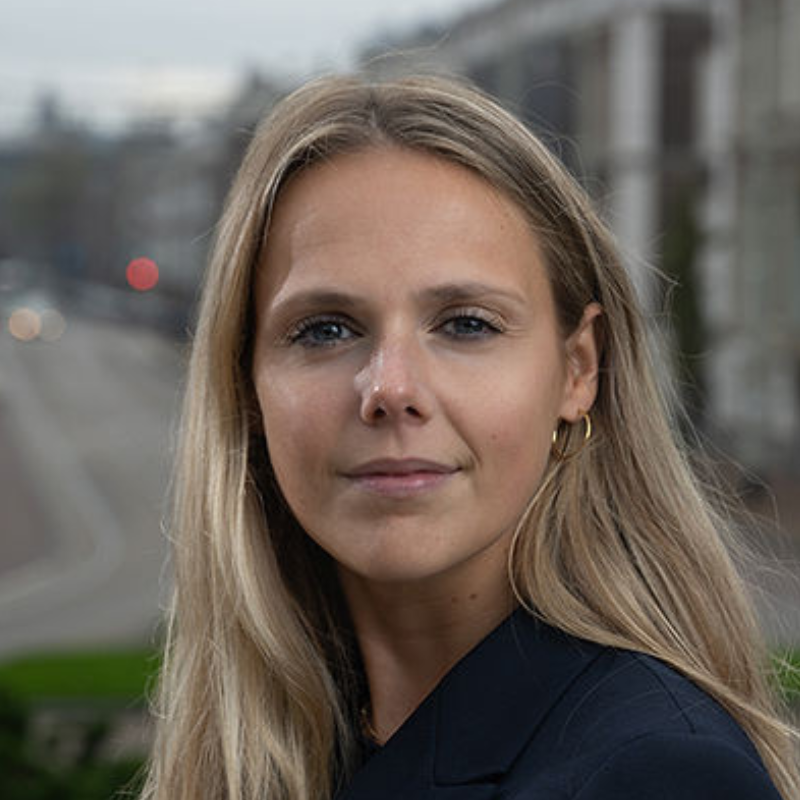
Carolien Janssen
Contact details
.avif)
Latest articles & insights
I will continue to actively share my research through articles, analyses and updates about new developments.
CAF - License to Disturb/Always Reject When in Doubt
Utrecht, November 27, 2019 Dear Mr. Uijlenbroek, Dear Jaap, As a team, we were enormously affected by the Secretary of State's letter to the House of Representatives dated November 15. Shocked because, in our eyes, a one-sided image becomes...
KPMG Report part 2: CAF Team
House of Representatives General 2 Meeting Year 2023—2024 31 066 No. 1414 kst-31066-1414 ISSN 0921 - 7371 The Hague 2024 Tax Administration LETTER FROM THE SECRETARY OF STATE FOR FINANCE To the President of the House of Representatives of the...
'I've never done it before so I think I can do it' was the approach at the CAF - the CAF pieces at a glance
'I've never done it before so I think I can do it' was the approach at the CAF. The CAF The Combination Team of Approach Facilitators, or the CAF, may not have been the largest team in the tax authorities, but it was one of the...