Entrepreneurs, the forgotten group in the benefits scandal
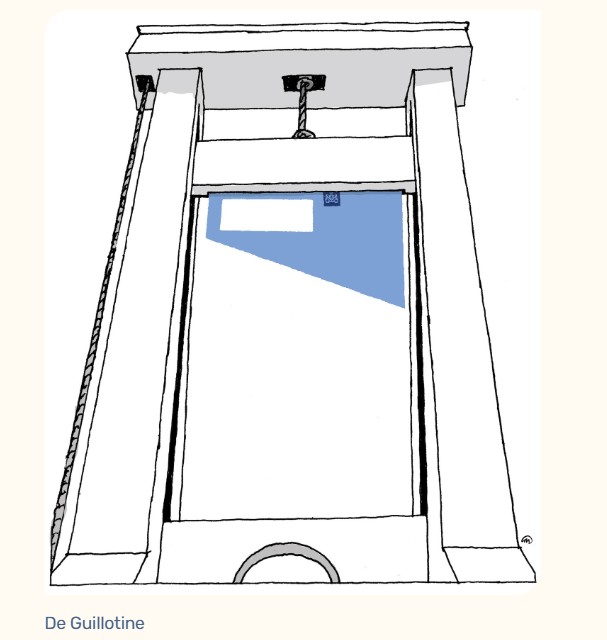
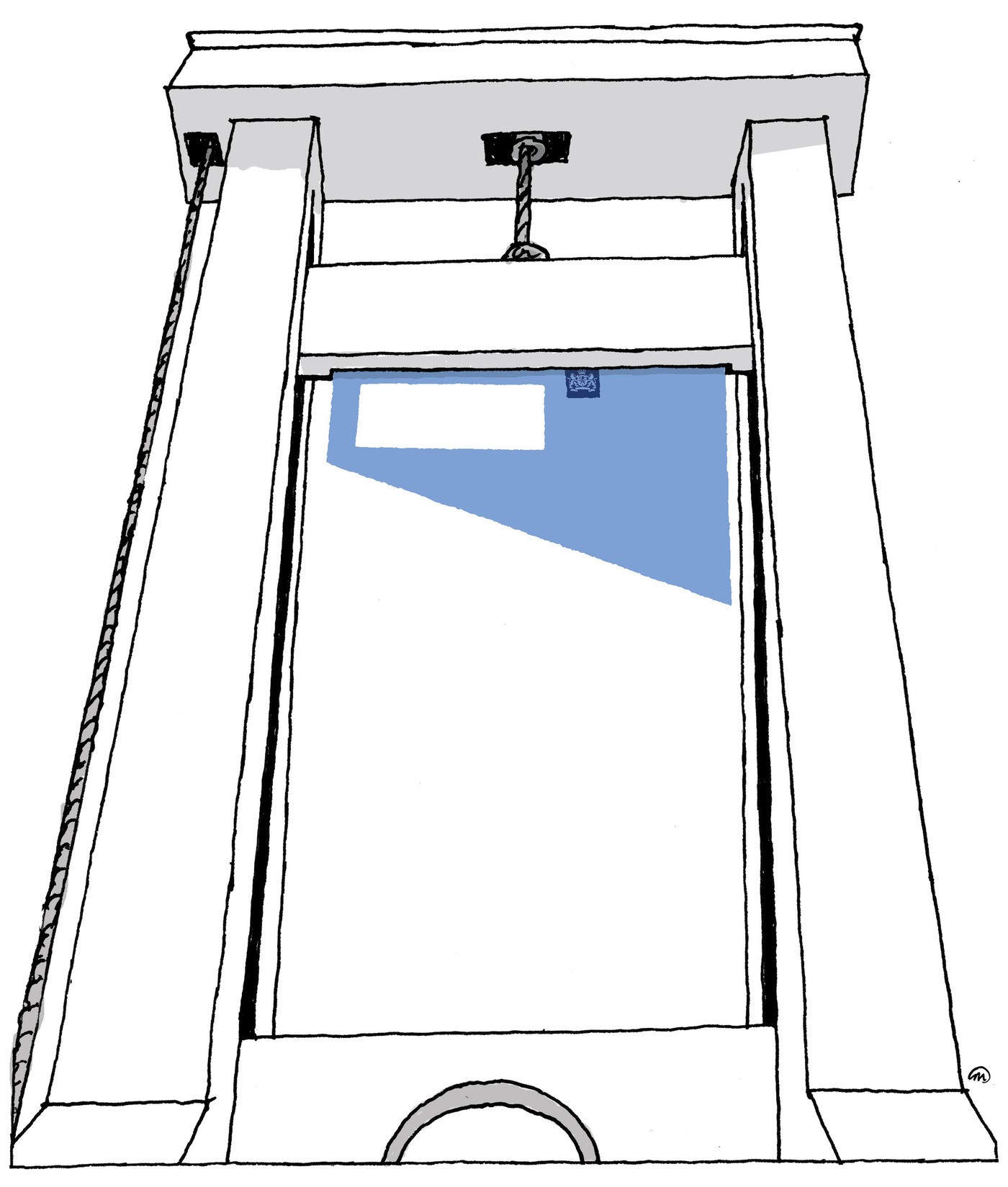
Paula Bouwer and Marco de Vries image Milo
April 2, 2025 – published in no. 14
Marco de Vries previously wrote for De Groene about misconduct at the Tax and Customs Administration.
Paula Bouwer is a childcare benefit victim who has been active for years in providing information and support to other affected parents. She completed two investigative journalism training programs.
Recently, Nora Ghazoun has a home again, a rental apartment in a neighborhood under construction. When she looks out the window, she sees piles of sand, construction fences, and concrete mixers driving back and forth through the mud. On her balcony live first-time buyers with young children and big plans. They remind her of who she was fifteen years ago. She had a thriving driving school and lived with her two children in Zoetermeer.
But in 2010, she found grim letters from the Tax and Customs Administration on her doormat. She had to provide proof or else pay back tens of thousands of euros in childcare benefits. Nora sent receipts, bank statements, and notices of objection. But the letters kept coming and caused so much stress that she got into a car accident. As a result, she couldn't work for a while and had no income. Her children's school caught wind of domestic problems and reported it to Youth Services. On a Friday in 2012, staff members rang the doorbell to take ten-year-old Nizar and eleven-year-old Lina away. They weren't home at the time. Youth Services said they would return on Monday.
That weekend, Nora fled with her children to Germany. ‘I didn't want to lose them, so we left everything behind. Our belongings, their school friends. Lina and Nizar didn't understand what was happening to them. I didn't want to tell them the reason.’
For ten years, the family wandered through Germany. They had to move seven times, from mobile homes to sublet rooms in remote villages. The teenagers couldn't settle anywhere, and Nora was rarely home. Her credentials only allowed her to give driving lessons in the Netherlands, so she traveled about three hours each way to her students in Venlo. Because of the wrongful stigma of being a fraudster, she ran into trouble with the Central Office for Motor Vehicle Driver Testing (CBR), banks, and insurers. Despite this, she managed to pay off her tax debt.
As they hit puberty, the children fared worse and worse. They struggled with eating disorders and drug addiction. Nora was blamed for everything. As a teenager, Lina ended up in the hospital after a suicide attempt.
In 2020, there was a phone call from the Tax and Customs Administration. Mistakes had been made. She received letters with apologies and the promise of ‘generous’ compensation. She received the wrongfully repaid childcare benefits back, with a little extra for the inconvenience. The municipality provides welfare assistance for Nora and her young adult children. In the new apartment, she makes do with a hot plate. There is no room for her daughter, who is still studying in Germany.
None of the ambitions she had for her driving school ever came to fruition. At the time, she was planning to expand into truck and motorcycle lessons and had intended to hire instructors. Now, she cannot muster the focus to teach again. "I want nothing more than to leave the past behind me. But the settlement procedure just drags on and on."
Nora's past is an endless calculation that no one wants to tackle. Our investigation reveals that entrepreneurs affected by the childcare benefits scandal have barely been helped by the recovery operation, which has been dragging on for five years. They have no prospect of compensation for their business losses, and some are still being hounded by creditors. It is the latest episode in the multi-billion-euro soap opera that the recovery operation has become.
The compensation process for the most severely affected victims must change, the Emergency Advisory Committee for the Progress of the Childcare Benefits Recovery Operation concluded at the end of January. Chairman Chris van Dam stated that "the promised generosity is not being realized. The recovery operation is completely deadlocked and legally substandard. Parents have been living in uncertainty for years."
In 2020, against expert advice, the settlement of damages was not outsourced but entrusted to a new department within the Tax and Customs Administration itself: the Recovery Operation Implementation Organization (UHT). The UHT devised three phases for this. While the initial expectation was a few hundred victims, seventy thousand people applied for the first phase, the "light assessment." Of these, 41,000 parents have now been recognized and received a 30,000-euro advance in accordance with the so-called Catshuis scheme. Their outstanding debts are being cleared.
The expectation was that most victims would be sufficiently compensated by this, but almost everyone applied for the second phase. In this "integral assessment," the incorrectly reclaimed or reduced benefit is precisely calculated, with a 25 percent surcharge, interest, and a small non-pecuniary damage payment of 500 euros per six-month period.
However, many victims feel they are receiving too little because their benefit debts were offset for years against things like housing benefits or VAT refunds they were also entitled to, and they are filing appeals.
Only in the third phase, which Van Dam says is completely deadlocked, is their additional damage addressed, such as the consequential losses of entrepreneurs. But that is complicated to determine. After all, can you fully attribute lost turnover, failed plans, or bankruptcy to the benefits scandal?
Parents can submit their claims to the Actual Damage Committee (CWS), Princess Laurentien's Foundation for Equal Recovery, or three other offices, each with a slightly different approach. For entrepreneurs with debts exceeding 50,000 euros, there is an additional office, but it turns out that a large portion of them are unaware of its existence.
Nora has submitted her actual damages through one of the Ministry of Finance's alternative routes: a mediation process. However, it is difficult to properly substantiate a claim after so much time. She had to leave her records behind in a rush fifteen years ago. She is seeking compensation for the years she was unable to provide as many driving lessons and for her flight to Germany. She is also requesting compensation for the fact that her driving school could not grow as intended. The discussions are ongoing.
The entire recovery operation is now estimated to cost fourteen billion euros, nearly three times the amount that was originally reclaimed. Due to the sluggishness, billions are being spent on implementation costs. The actual damage to the ruined lives of parents and children is only being acknowledged by the Ministry of Finance bit by bit. No scheme has been created yet for determining the business losses of entrepreneurs like Nora. The damage is difficult to quantify and often involves large sums.
According to a UHT report from late 2021, this involves 8,640 affected entrepreneurs with 1.5 billion euros in incorrectly paid benefits, wrongly imposed fines, and outstanding tax debts. More recent sources at the Ministry of Finance estimate the number at around five thousand affected entrepreneurs.
Through LinkedIn and WhatsApp- and Facebook groups for victims, we connected for this investigation with over forty entrepreneurs affected by the benefits scandal. Almost all are freelancers or sole proprietorships in sectors such as healthcare, business services, hospitality, or childcare. Eighty percent have a migration background, and more than eighty percent have had to close their businesses. The additional damage is significant, according to the responses we received. A quarter estimate their losses between one and three million euros, and another quarter are even above three million.
All in all, the business losses run into the billions. According to a UHT spokesperson, this item is not yet included in the fourteen-billion-euro estimate. "Entrepreneurs are a blind spot for us. We know little about the background of the victims. They have to come forward with their additional claims themselves in the third phase."
In addition to debt, the entrepreneurs are struggling with relationship problems, interference from Child Protective Services, and serious health issues. "I have developed PTSD over the years," one entrepreneur writes. "Living in constant fear and stress has broken me. The things that have happened to me have led me to think about death every day. It is very painful to see your children gloomy and to see how they fight alongside you in silence."
Another wrote: "They took thirteen years of my golden years away from me. My successful business was taken from me. I lost my home." A third entrepreneur: "Our life stopped in 2009. Everything revolved around paying off the debt. I had to drop out of my studies, my husband's car was seized, which meant he couldn't perform his work. The children needed extra support that we couldn't provide. Sports and swimming lessons—none of that was possible."
Among the affected businesses childcare institutions were also caught up in the scandal. One of the victims is Gulsah Akpinar. She owned two Caleido Kidzz branches in Amsterdam-Osdorp and was on the verge of opening a third. Around that same time, in early 2012, she gave birth to her third daughter. When she also started attending daycare, Gulsah suddenly received repayment demands. The Tax and Customs Administration claimed she was not entitled to childcare benefits for her own children. "They told me to just take them to the neighbors. But why would I? I had a limited company with 25 employees, and the children were being cared for by staff. I was definitely incurring costs."
She filed an objection. Meanwhile, clients also began complaining that their benefits had been stopped. "Every month, parents would come in with one of those letters. They were always vulnerable people: single mothers with a migration background, people going through the integration process. Some took their children out of daycare. Others stayed. As long as they paid their own contribution, they were allowed to bring their children. I didn't suspect a thing. Everything was in order, so I assumed the investigation would turn out fine."
The share of parents without benefits grew to more than ten percent. "I had already abandoned the third branch and had to be very creative to keep the other two running. Because the costs kept mounting while the income dropped." It was a Tax and Customs Administration employee who, after three years of decline, advised her to file for bankruptcy. "You're in a labyrinth, he said, you'll never get out of it." In May 2015, her company was declared bankrupt. "A few days later, I was proven right," she says. "I was entitled to the benefits after all and got my money back. But it was too late to save the business."
Gulsah recently learned that her company was a victim of the Combiteam Aanpak Facilitators (CAF). This fraud team within the Tax and Customs Administration searched fiscal data for companies and individuals with a high risk profile. Freedom of Information documents show that Caleido Kidzz was one of the first childcare institutions to be targeted by the CAF. "I had to go bankrupt; that was the strategy. So that I could no longer 'facilitate' fraud. But it wasn't based on anything. To them, it was just a dirty game." Many of her clients were also assigned a higher risk profile, as shown in a document Gulsah displays. "Look, in the file of one of my clients, it says: 'There is evidence of discrimination.' It’s literally written there."
Caleido Kidzz is not the only childcare institution affected. During the years the Combiteam Aanpak Facilitators was active, hundreds of institutions went under, according to figures from Statistics Netherlands. And all those daycare centers and childminder agencies dragged dozens of parents and children down with them. The primary targets were institutions with owners or clients from a migration background. In released internal memos, the CAF leadership is urged to operate across borders using data analysis and biased audits. The end justified the means, as two parliamentary inquiries made clear. Objections against the benefit terminations, repayment demands, and fines were systematically delayed, and the applicants were brushed off. Profiled entrepreneurs and parents were placed on a blacklist, the Fraud Signaling Facility, which often led to them being flagged as potential fraudsters by other government agencies, banks, and insurers.
After her bankruptcy, Gulsah was able to make a fresh start with one branch. "I had to buy back my own assets and let the other branch go. Hundreds of thousands in investments, the benefits never paid by the Tax and Customs Administration, the lost profits, the growth plans that never materialized: it’s all with the Commission for Actual Damages (CWS)." During this difficult period, her marriage also fell apart, and her eldest daughter developed severe stress symptoms. "She was twelve and had terrible headaches, eventually even developing facial paralysis. Because of that, she didn't finish school. Fortunately, she's doing well now. She’s always working. 'We need money, don't we?' she says. She grew up fast during that time."
Like many other victims on the waiting list, she has served the CWS with a notice of default. She receives 250 euros for every day of delay. "The ministry is no longer intimidated by those penalty payments. But I hope it will help us get our turn a bit faster."
For businesses, there is the problem that the damage to the company is not the same as the damage to the owner or shareholder. Gulsah can no longer collect the money that the bankrupt company was still owed by the tax authorities. However, she does want to try to get compensation for the lost appreciation of her business. If it had continued to grow, her shares and dividends would have increased in value as well. This type of damage is described by experts as future loss or loss of opportunity.
A damage expert can substantiate and calculate whether and to what extent there is a causal link between the benefits scandal and the unrealized opportunities or plans. "The recovery operation does not yet provide for future loss or loss of opportunity at all," says personal injury lawyer Cyril Spiertz. "The name 'recovery operation' actually says enough: it is assistance, compensation, not damages."
For a group of dissatisfied victims, Spiertz successfully went to the civil court. "It offers more possibilities and a stronger position as a plaintiff. In 2023, the government acknowledged unlawful government conduct in two of my cases. Therefore, the state is liable for all resulting damages."
Many victims suffer from psychological issues such as PTSD and depression, which can in turn lead to physical problems. Many children are also traumatized and have missed out on educational opportunities. All of this is damage that can continue to play a role for the rest of their lives. That future damage for children and parents, including entrepreneurs, is not yet recognized by the recovery operation.
The door of the terraced house of Ikra (not her real name) in Amsterdam-Geuzenveld has no house number or doorbell, because bailiffs might still show up. Inside, everything has been refurbished with the initial compensation. But the family ties between Ikra, her husband, and their five children are damaged. "We live here like strangers to each other," she says. "It’s just like a hotel. Everyone leads their own life. My youngest daughter was raised by my eldest and calls her 'mom.' She thinks I’m just a scary lady. That hurts."
Her youngest children were attending Caleido Kidzz when the benefits were stopped. Ikra and her husband both became unemployed during that time and started a small food stall. With the revenue, they paid back eighty thousand euros in benefits. It was hard work, often until deep into the night. Ikra no longer dared to take the youngest ones to daycare. The older children took over the caregiving duties. She developed serious heart problems due to the unhealthy, stressful lifestyle and even had to terminate a pregnancy in 2019. After heart surgery, she could no longer return to work.
During her illness, her husband and son were unable to keep the business running. Everything was lost. It pains Ikra that she has lost her role in the family. Her children are alienated from her or blame her for the business fiasco. She hasn't spoken to her mother, who lives two streets away, for years. "The damage to my reputation, my honor—that’s what I find the worst. It’s strange that there is no mention of that in the compensation schemes."
She had to file an objection three times against her comprehensive assessment and go to court to get back all the benefits she had wrongly repaid. She is now in a process for actual damages. It will be difficult to prove that starting her own business became necessary because of the tax authorities' additional assessments. Ikra's health damage is also not a direct result of the assessments, but of the hard work to pay them off. On the other hand, no one will deny that her life would have been different and happier if she hadn't been innocently profiled by biased fraud hunters. "The victim has to make the causal link plausible," says lawyer Suzanne Arakelyan, "and the CWS can still decide that they don't see that link."
For instance, the Commission for Actual Damages denied a link between the repayment demands and the bankruptcy of a courier company owned by a couple with nine children. The couple requested their file, and it turned out that a Tax and Customs Administration employee had indeed identified the link at the time of the bankruptcy. They were eventually paid out a portion of the damages.
Lawyer Eva González Pérez, who played a key role in bringing the scandal to light, claimed according to the Eindhovens Dagblad one million in damages for her husband's childcare agency. This case was also settled for an undisclosed amount.
The advice provided by the Objections Advisory Committee is public. It issued two rulings regarding the actual damages suffered by entrepreneurs. A cafeteria owner faced liquidity problems due to the clawback of benefits, but his claim was rejected. The owner of an online store for funeral products was also denied compensation for loss of profit. She argued that the clawback sent her business into a downward spiral, but the committee found no causal link.
Another victim recently took his case to the administrative court. Initially, the CWS awarded him fifteen thousand euros in damages. The administrative judge noted that the father of four and the CWS had ‘ended up in a legal maze from which neither can find the exit’. The man had lost his home and become disabled. The judge arrived at a damage amount of over five hundred thousand euros, stating it was a case of ‘generosity over precision’. However, the victim will not receive the requested compensation for his lost career as a lawyer; he is only receiving ten thousand euros for having to drop out of law school.
Many entrepreneurs have had to take on extra debt to keep their businesses afloat or to restart. They complain that they are not receiving sufficient help. Take the owner of a temp agency and father of two. After the childcare benefit clawbacks, other corrections and tax assessments followed. ‘They are willing to waive the tax debt,’ he says in his otherwise empty office, ‘on the condition that I shut down my business. But I don’t agree with that tax debt. On the contrary, I am owed money. And I can’t just stop, can I?’
He feels pressured by the Ministry of Finance’s corporate debt department to sign a so-called ‘de-minimis declaration’. This caps the debt waiver at the EU-permitted maximum of three hundred thousand euros in state aid. ‘They apparently see the recovery operation as aid, but I see it as compensation for damages. Because I refuse to sign, I am not getting help from other agencies either.’
According to the spokesperson for the Recovery Implementation Organization, thirteen hundred affected entrepreneurs have registered at this desk. ‘We are always looking for an appropriate solution, indeed within the framework of European regulations.’ Nevertheless, many entrepreneurs are frustrated by this, as evidenced by the stories we receive. For example, the Ministry of Finance refused to pay overdue rent for a farmer in financial distress. As a result, he lost the rights to his land and his farm is no longer profitable. The best sushi chef in the Netherlands lost her business and was evicted four times due to rent arrears. She worked for the high-end market, but due to all her debts, she can no longer supply her products. An entrepreneur with a clothing store is being pressured to quit and settle for a disability payment if he drops his claim for actual damages of over a million.
The debts quickly make further business operations impossible, it turns out. One entrepreneur emailed: ‘BKR credit registration problems meant we couldn’t get a loan or start-up capital. We couldn’t apply for a card payment terminal. Everything that involved finances or was even remotely related was immediately rejected, without any explanation.’
Another wrote: ‘Because I couldn’t even apply for benefits, I was forced to work as a freelancer. And because I had to pay off very high amounts to the Tax and Customs Administration, I had to perform certain tasks (prostitution – ed.) that have truly ruined my life and left me deeply damaged. I know other parents who have unfortunately had to endure the same. Because of this, there is a code behind my name again, which makes finding a normal job very difficult now.’
In addition to debts, loss of turnover, and bankruptcy, entrepreneurs report a striking amount of non-pecuniary damage: broken relationships, children placed in foster care, illness, and suicides. ‘I was an absent mother because I had to be a slave to work,’ writes one entrepreneur. ‘The kids were forced to stay with “someone” where one of my kids was even abused… I found out afterwards. Because of this, the kids couldn’t go to recognized childcare. Severe humiliation, emotional damage; no one believed this problem, I was seen and treated as a problematic person.’
Another emailed: ‘My son has crooked toes from shoes that were too small, back problems from not being able to wear orthotic insoles, and collapsed ankles as a result.’ ‘Husband: blood pressure problems, kidney failure,’ reports one respondent. ‘I myself have had two burnouts and am on antidepressants. Both of us have severely neglected teeth due to stress and grinding our teeth. The children are now afraid of the world because if your own government does this to you, what is the future outlook? The eldest failed their exam: it coincided with the uncertainty of whether or not we would be recognized.’
Many children have had a hard time. ‘Not being able to buy enough food,’ writes one parent, ‘not being able to buy new clothes, stress and arguments, an overstressed mother, overstressed children, a disrupted relationship with the children. No vacations, day trips, or being able to do fun things with the children.’
State Secretary Sandra Palmen (NSC), who is tasked with repairing the consequences of the childcare benefits scandal, has meanwhile adopted most of the recommendations from the Van Dam emergency committee. In January, the committee advised that relatively simple cases could be settled using the fixed amounts per damage category from the Stichting Gelijkwaardig Herstel (Foundation for Equal Recovery). Alternatively, parents can claim their damages directly from the UHT with the help of a lawyer.
However, Palmen is delaying the customized approach, which includes the difficult-to-calculate damages of entrepreneurs. While Van Dam proposes an independent Commission for Complex Damage Claims, Palmen only mentions a ‘yet-to-be-formed route for complex damages’ in the cabinet’s response. Unlike Van Dam, she does not mention the entrepreneurs at all and provides no further details about that route.
The poorly functioning desks for entrepreneurs are being shut down. But the long line of people waiting has nowhere else to go. Palmen did write to the House of Representatives that she has ‘an eye for explainability, by ensuring the relationship between the damage suffered and the benefits scandal is as well-guarded as possible’. Meanwhile, lawyer Spiertz is busy with proceedings in civil court. He has lost faith in the promises of generosity and independence. It is Spiertz’s experience that the experts hired by the Tax and Customs Administration provide lower valuations than when they are appointed by the court in consultation with both parties.
‘For simple cases, the Laurentien method is sufficient, but I would submit complex cases, such as those involving entrepreneurs and future damages, to an independent judge.’
Lost home, burnout, and bankrupt business – De Groene Amsterdammer
.avif)
Latest articles & insights
I will continue to actively share my research through articles, analyses and updates about new developments.
PRESS RELEASE: “EVERYTHING LOST AND NOTHING RESTORED” - EMBARGO UNTIL MAY 7, 5 P.M.
EVERYTHING LOST AND NOTHING RESTORED - GENEROUS RECOVERY AWAYENTREPRENEURS WERE UNFAIRLY TRIPLE HIT AND DUPED BY THE ACTIONS OF THE TAX AUTHORITIES On May 7, 2026, at the initiative of the House of Representatives, Inge van Dijk (CDA), an interview took place at the Ministry of Finance, Korte Voorhout 7 in The Hague. The state secretaries of the Ministry of Finance Sandra Palmen (Allowances) and Eelco Eerenberg (Tax Administration) with Paula Bouwer, Stichting Herstel Onbekend Inrecht (which lost three companies) and representatives of the Interest Group for Duped Entrepreneurs Allowances/FSV/SMEs. Present are Alex de Wilde (who experienced bankruptcy in his employment agency), Gulsah Akpinar (who experienced bankruptcy with her childcare institution) and Joost Allein Richir (who worked as a lawyer at the tax authorities for more than 40 years and is now working for the foundation as a volunteer). According to the EU, entrepreneurs have “the right to the freedom to do business”. They have been deprived of this right.
If only one pen is wrong, you hang
BANKRUPTCY CHILDCARE INSTITUTION & REINTEGRATION AGENCY MOTHER M. AND DAUGHTER L. Mother and daughter have a childcare institution and a reintegration studio in the Municipality of D. After more than 50 years of doing business, the company is going under. An unpaid bill from the Municipality of D. plays a major role. Daughter L. is suspected of fraud with benefits. Meanwhile, an alderman is stalking with text messages. Supervision by GGD and Police will follow. Her reputation as an entrepreneur has now been seriously damaged. Even the Rotary shows her the door. She can't find a job at her level anymore, after her bankruptcy. Her mother can't do it all anymore, there is a great fear that her grandson will be removed from home. Her daughter is also in constant danger.