Why recovery surgery surcharges fail? Pure unwillingness, says CDA MP Van Dijk
Interview Procedures
Why recovery surgery surcharges fail? Pure unwillingness, says CDA MP Van Dijk

The Ministry of Finance does not assume the interests of the affected parents, but continues to place its own procedures at the center of repairing the benefits scandal. 'Pure unwill', says MP Inge van Dijk.
Esther Lammers March 10, 2025, 6:00am
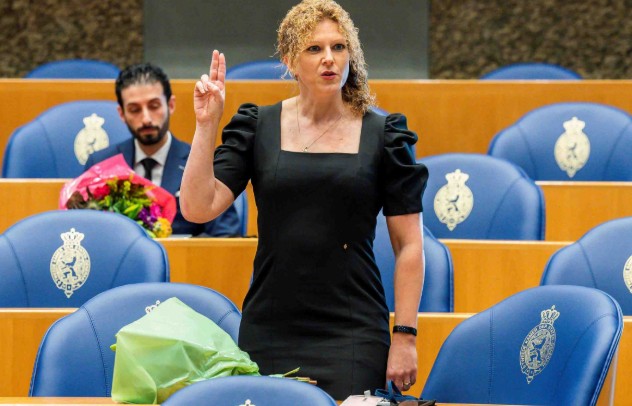
In recent years, the House of Representatives has called on the cabinet in dozens of motions to put parents first, so that they can quickly get their lives back on track. But that didn't happen. For each new step in recovery, parents have to jump through 'a hoop', says Inge van Dijk (CDA). “It's crazy.”
The Secretary of State for Benefits, Norah Achahbar, who resigned last year, saw the recovery operation completely stalled, and therefore asked the Van Dam Commission for emergency advice. He concluded in January that it could indeed take up to twenty years before everyone is helped. Van Dam mainly recommended working according to the method of Princess Laurentien, who does put the parents' story first. The cabinet will issue a response on Friday.
After four years, Van Dijk is the most experienced Member of Parliament dealing with surcharges. She notices that public attention is gone from the parents of the allowance affair, although she herself still speaks to victims on a weekly basis. They already call the recovery operation a “recovery scandal”, or “recovery misery”.
Crying parents
Van Dijk understands that. Almost all victims have now received the promised 30,000 euros, but further processing of the damage or help with recovery is extremely slow. Van Dijk regularly gets crying parents on the phone. “They say: 'Inge, I actually feel worse now than before. ' So that's what we've achieved.”
As a recognized victim, the parents hoped to be able to put the misery behind them. “But they're still in the middle of it. Again and again, they have to tell their story to someone who looks at them wide-eyed.”
The recovery operation has been initiated from day one, she says. “The Rutte III cabinet went far too fast. Something had to be done immediately when the benefits investigation came out. That is why the Catshuis scheme came up with 30,000 euros for all victims. That was far too little for serious victims, but plenty for parents who only had 2000 euros in damage.”
The government should have come up with a good solution together with the victims. “But a process was immediately set up that sent parents from desk to desk for each new phase. I call that bizarre. Surely you can't solve the benefits story like that.”
Impossible tangles
Partly because of this, the recovery operation for parents has become an 'unclear' and 'impractical tangle', says Van Dam. The cabinet must use an “administrative heavyweight” who, as a crowbar, ensures that victims actually come first.
Van Dijk is skeptical whether that will happen. “He actually says nothing more than what we, as a House, have been saying for years: listen to the parents and focus on their recovery. That's not surprising either, because the committee spoke to the same parents. But it always didn't happen. Why should the advice be followed now? Although I really hope so for the parents.”
There are two ways to look at a challenge, says Van Dijk. “You think: this is going to be very difficult, but I'm going to try it anyway. Or, you're thinking: I don't want to burn my fingers about this. And that last part, that feeling, is just what I really feel.”
“More unwillingness than ignorance”
The MP therefore finds the stalling of the recovery operation “more unwillingness than ignorance”. “I still understand that you test to determine whether someone has been duped. But not that you're going to set up all the hoops for those parents after that. That you even think you can solve the allowance file efficiently and process-wise. Then you're really shortcoming people.”
And it's just about people with multiple problems, says Van Dijk. “Not only is there a lack of money, there are also health problems, and a lot has happened in that family. You should approach this integrally, not per component. That's not how it works in a family, or in life. Sometimes solutions are difficult, sometimes not at all. But because everything is so difficult to set up now, every solution is further out of sight.”
Van Dijk expects the complicated damage routes to be greatly simplified, and there will be customization to solve the complicated cases. But the most important thing, she believes, is that victims only have to tell their story once more. “Their story should be the starting point for all damage and repair.”
Princess Laurentien's method
This would focus on the method of the now controversial princess Laurentien. But that's exactly what parents are very satisfied with, says Van Dijk. “That does frustrate me. Because it also makes so much sense. How can you know what help to offer if you don't know the story? It's just strange that listening to allowance parents isn't the first thing they do in recovery surgery.”
According to the Van Dam committee, the government promises far too much, which it cannot deliver. Van Dijk also recognizes that: “Because how do you provide housing if there are too few houses? How are you going to help parents with their health, with those huge waiting lists? The problem is that when you make such a promise, you also create expectations. And if nothing happens, the parents' frustration only grows.”
Also read:
Emergency Committee advises' Laurentien 'method for recovery surgery surcharges
Van Dam Commission wants method Laurentien to be used in everything recovery surgery for allowance parents
.avif)